
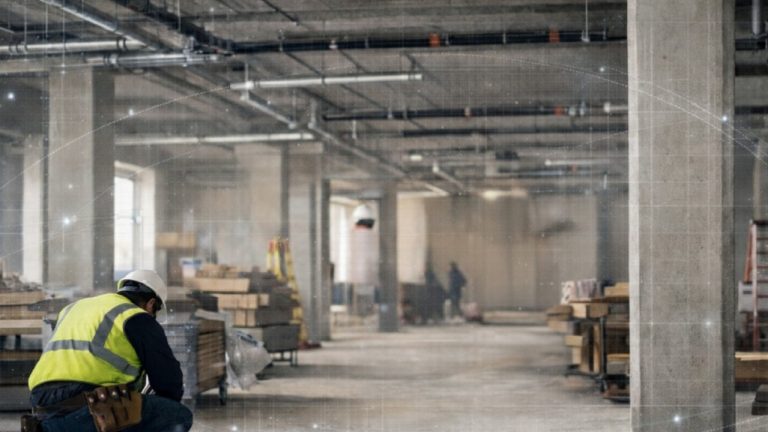
From Trust-Based to AI-Verified: Rethinking Installation Accountability
Introduction
In the construction ecosystem, installation accountability has traditionally depended on trust: trust in teams, trust in checklists, and trust in periodic inspections. For decades, general contractors and property owners have relied on experienced field personnel and manual documentation to confirm quality. But as projects grow more complex, schedules tighten, and stakeholders demand transparency, trust alone is no longer sufficient — nor reliable.
Installation quality issues still arise not because contractors are negligent, but because the mechanisms to observe, record, and verify work are outdated. Manual site reports, fragmented photo documentation, and disparate inspection forms create gaps that lead to disputes, rework, and delays. In response, a new class of tools is emerging — anchored in artificial intelligence — to support accountability throughout the project lifecycle.
This isn’t about replacing human expertise. Rather, it’s about enhancing it with data-backed verification that strengthens decision-making, improves collaboration, and provides a defensible record of what actually happened on the jobsite and when.
Why Trust-Based Models Are Showing Their Limits
In most construction workflows, installation accountability happens after the fact:
- Field crews install a system.
- Inspectors or project managers review it at designated checkpoints.
- Reports and photos are stored, often in disparate systems.
- Questions about compliance or workmanship are resolved through meetings and subjective interpretation.
This “check-at-the-end” approach works only if installations align perfectly with plans and standards — which isn’t always realistic. When differences arise between design intent and execution, stakeholders often revert to memory, email threads, and paper reports to resolve disputes. Those sources are difficult to standardize, search, or verify against objective criteria.
Moreover, manual inspection processes are inherently inconsistent. Two inspectors looking at the same installation might emphasize different criteria. Photos may lack context. Notes may omit critical details. This inconsistency can lead to gaps in quality documentation and, ultimately, to disagreements between owners and contractors when expectations aren’t met.
These limitations are not a critique of personnel — they are a reflection of process and tool gaps. As project complexity grows, so does the need for reliable, consistent, and traceable installation verification.
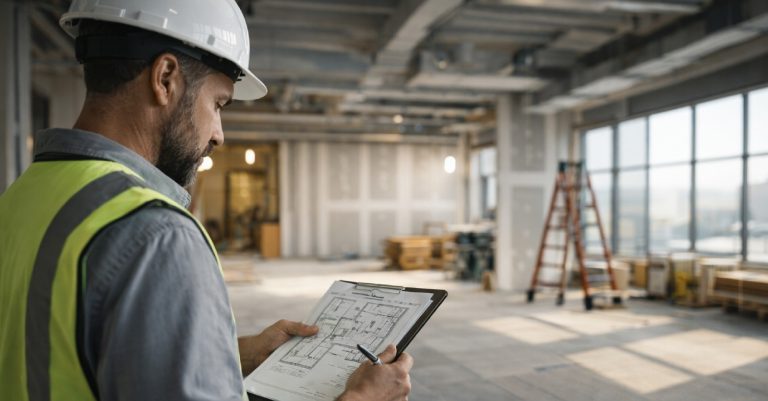
Introducing AI-Verified Accountability
Artificial intelligence (AI) can help bridge the accountability gap not by replacing field expertise, but by augmenting it with smart analysis and pattern recognition.
For example, modern AI systems can:
- Identify patterns and anomalies in installation data that manual review might miss
- Standardize documentation across projects and teams
- Surface insights in real time, rather than waiting for periodic inspections
- Translate unstructured notes and photos into structured, searchable records
- Highlight potential quality issues early, enabling timely course correction
These capabilities shift accountability from a trusted assumption to a data-verified reality — without demanding more effort from field teams.
This is where AI tools like JengAi come into play. Rather than being a standalone solution for inspection, platforms such as JengAi’s AI-powered construction suite can analyze project data, help automate reporting, and flag inconsistencies as they emerge, providing stakeholders with confidence in the record rather than just faith in the person holding the clipboard.
By integrating AI into workflows, firms aren’t handing over control to machines — they are giving teams smarter tools to document, verify, and communicate installation outcomes with clarity and precision.

Where AI Supports, Humans Still Lead
A common concern among industry professionals is that AI might replace human judgment. That’s not the intent — nor the practical outcome.
AI excels at processing large amounts of data, recognizing patterns, and generating insights quickly. But it lacks domain context, field experience, and the nuanced understanding that seasoned professionals bring to complex decisions. The best results emerge when AI is positioned as an augmentation tool.
Consider a scenario where an AI platform analyzes hundreds of installation images and field notes to flag potential deviations from specifications. The system can point out where further review is needed, but it remains the responsibility of project professionals to interpret, decide, and act on that information. In this way:
- Project managers retain oversight
- Inspectors maintain authority over technical decisions
- Owners and GCs benefit from faster, more consistent verification without ambiguity
AI does not reduce accountability — it amplifies it with evidence that is easier to organize, review, and trust.

Practical Advantages for Owners and GCs
When AI-augmented workflows are implemented thoughtfully, organizations begin to see practical benefits:
1. Reduced Disputes Through Verifiable Documentation
Rather than relying on subjective field reports or isolated photos, AI-assisted records provide structured, searchable evidence. This context helps resolve questions about installation quality without ambiguity.
2. Early Detection of Potential Issues
AI tools can surface patterns of installation deviation early, enabling teams to address concerns proactively rather than during close-out or post-handover reviews.
3. Consistency Across Projects
Manual documentation can vary widely between teams and sites. AI-informed processes help standardize reporting formats and criteria, making quality comparisons easier across projects.
4. Enhanced Collaboration
With structured insights, stakeholders — from subcontractors to owners — share a single source of truth. This reduces miscommunication and aligns expectations.
In a field where every day on site impacts budget, schedule, and reputation, reducing ambiguity is as valuable as reducing cost.
Axis Interior Systems: A Partner in Quality and Accountability
Installation accountability isn’t just about inspection — it’s about process discipline, transparency, and execution rigor. That’s where experienced partners like Axis Interior Systems play a key role.
Axis combines commercial flooring expertise with disciplined project management and rigorous quality processes. By approaching each project from planning through execution, Axis ensures that flooring systems are specified correctly, installed precisely, and backed by clear documentation — all of which contribute to accountability and performance for owners and general contractors. For more about Axis’ comprehensive services and robust process approach, see our commercial flooring solutions.
Whether managing moisture mitigation, coordinating materials, or overseeing occupied-space installations, Axis’ end-to-end perspective is rooted in quality, clarity, and accountability.

Conclusion: Accountability as a Foundation, Not a Checkpoint
As construction projects evolve, so must the mechanisms that ensure quality. Accountability should not be an endpoint — it should be woven into the workflow, supported by tools that help teams observe, record, and verify performance in real time.
Trust remains essential, but it must be paired with verification that can withstand scrutiny from all sides. AI doesn’t replace expertise — it enhances it, offering structured insight that empowers teams to deliver work that is not just completed, but measured, documented, and trusted.
In an era where disputes are costly, schedules are tight, and stakeholders demand transparency, the shift from trust-based to AI-verified accountability is both practical and necessary. The future of installation quality and accountability isn’t just smart — it’s verifiable.
Ready to ensure accountability on your next flooring project? Contact Axis Interior Systems today to elevate quality and performance with professional oversight.
Explore More Flooring Insights
Discover additional insights on commercial flooring systems, installation methods, and performance considerations across various industries.