Choosing the right flooring for a commercial space is rarely a simple decision. It affects how a space looks, how it performs under daily use, and how people experience it over time. One of the most common questions businesses face is whether to go with carpet or hard flooring.
Both options have clear advantages, but they serve different purposes. The right choice depends on how the space is used, the level of traffic it receives, and the kind of experience you want to create.
In this guide, we break down the differences between carpet and hard flooring across offices, schools, and retail environments, helping you make a decision based on performance rather than assumptions.
At a basic level, carpet and hard flooring solve different problems.
Carpet is designed for comfort, acoustics, and warmth. It softens a space, reduces noise, and creates a more relaxed environment.
Hard flooring, which includes materials like vinyl, tile, epoxy, and polished concrete, is built for durability, easy maintenance, and long-term performance under heavy use.
Organizations like the Carpet and Rug Institute emphasize that modern carpet systems have evolved significantly, offering improved durability and better indoor air quality than many people expect.
Still, the choice comes down to how each material performs in real commercial settings.
Carpet has remained a preferred option in many commercial environments, particularly where comfort and acoustics matter.
Carpet offers several benefits that are difficult to replicate with hard surfaces:
Carpet tiles, in particular, have become popular because they allow for easy replacement without disrupting the entire floor.
If you want a deeper look at how carpet performs in commercial environments, this guide on commercial carpet flooring provides detailed insights.
Carpet is often the best choice in:
In projects like JP Morgan Chase and Expressions Therapeutic, carpet helps create quieter, more comfortable environments that support focus and day-to-day operations.
While carpet has clear advantages, it also comes with tradeoffs.
It can be more difficult to clean in environments with spills or heavy soil. It may not perform as well in areas exposed to moisture or high levels of foot traffic unless getting a specialty product.
This is why carpet is rarely used in environments like kitchens, industrial facilities, or high-traffic spaces.
Hard flooring is designed to handle demanding conditions. It is the preferred choice where durability and maintenance are top priorities.
Hard flooring offers a different set of strengths:
These qualities make it a reliable choice for spaces that see constant use.
Hard flooring is commonly used in:
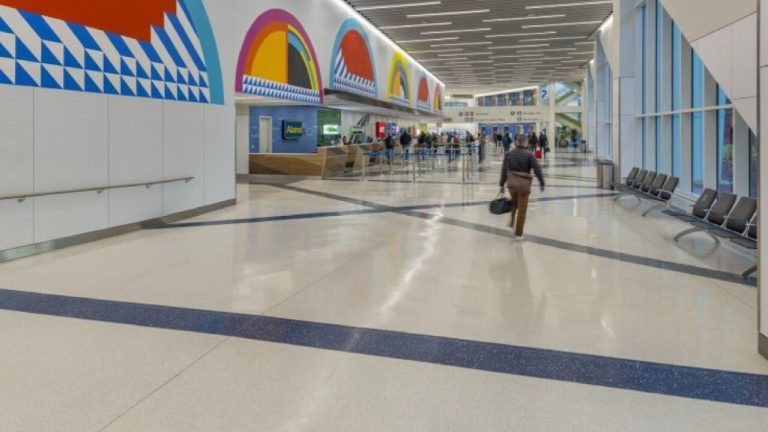
Projects like the Gwynne Building show how hard flooring can support both durability and visual appeal in retail and hospitality settings.
Despite its durability, hard flooring is not perfect.
It can feel less comfortable underfoot, especially for employees who stand for long hours. It also reflects sound, which can increase noise levels in busy environments.
In spaces where acoustics and comfort are important, hard flooring may need to be combined with other materials.
For example, in corporate environments, flooring choices often need to balance durability with employee comfort and overall workplace experience. You can explore more about selecting the right office flooring here.
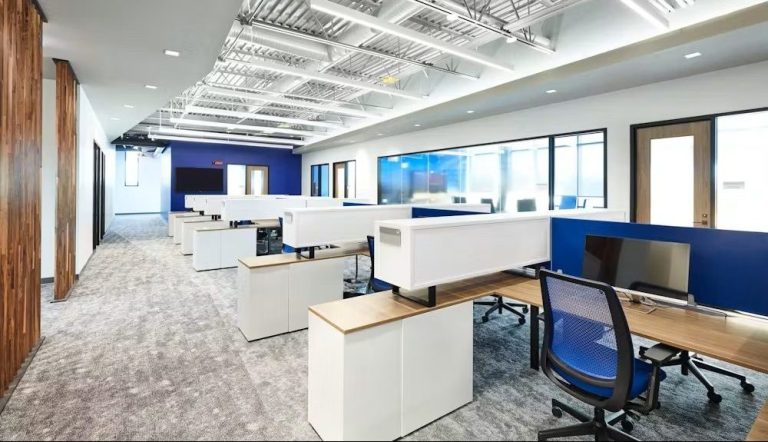
Offices often require a mix of performance and comfort. Flooring plays a role in both productivity and employee experience.
Carpet is typically used in:
Comfortable, durable flooring designed for productivity.

Professional, comfortable flooring for focused discussions.

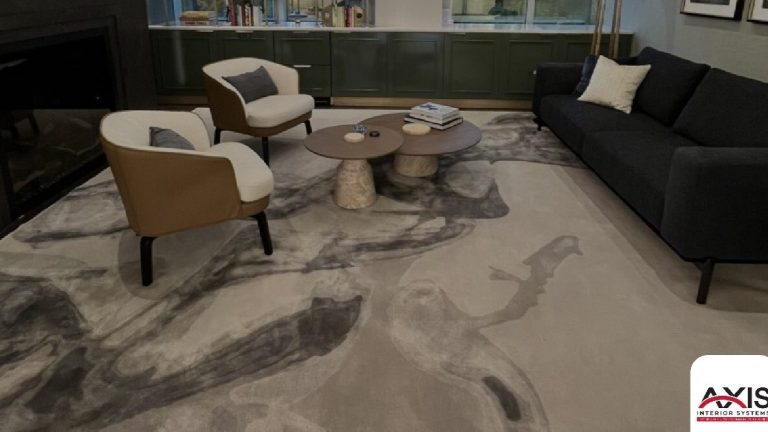
Premium flooring that reflects professionalism and style.

It helps reduce noise and creates a more comfortable environment for focused work.
Hard flooring is often used in:
Durable, stylish flooring that makes a strong first impression.

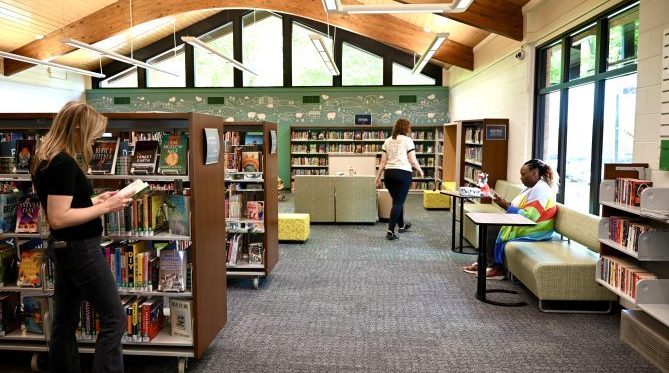
Comfortable, durable flooring designed for everyday use.

Durable flooring built to withstand constant wear.

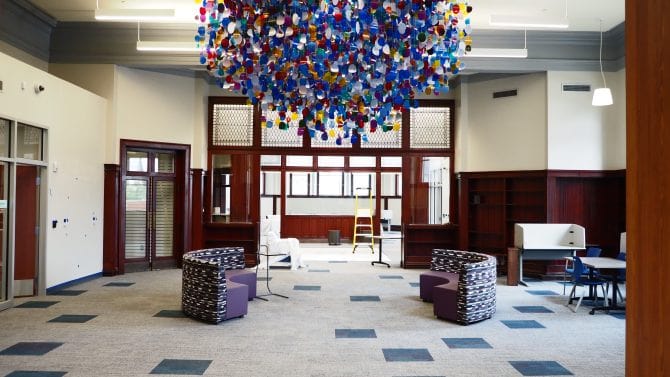
Educational spaces present a unique challenge, as flooring must withstand heavy daily use while also supporting a productive learning environment. Carpet is a good choice for classrooms where noise reduction is important, students spend long periods seated, and comfort enhances the learning experience. In contrast, hard flooring is better suited for high-traffic areas such as hallways, cafeterias, and lobbies or other common spaces.
Retail environments are driven by both appearance and performance. Flooring must support branding while handling constant foot traffic.
Hard flooring is often the primary choice because:
Carpet may still be used in:
Carpet is often the best choice in:
In projects like JP Morgan Chase and Expressions Therapeutic, carpet helps create quieter, more comfortable environments that support focus and day-to-day operations.
Cost is often a deciding factor, but it should be viewed in terms of long-term value rather than initial expense.
Carpet may have a lower upfront cost in some cases, but it requires regular cleaning and eventual replacement.
Hard flooring may cost more initially, depending on the material, but it typically offers:
The right choice depends on how the space is used and how much maintenance can realistically be managed.
There is no one-size-fits-all answer when it comes to commercial flooring.
The decision should be based on:
In many cases, the best solution is not choosing one over the other, but combining both strategically.
Carpet and hard flooring each have a clear role in commercial environments. One is not better than the other in every situation.
Carpet excels in comfort, acoustics, and creating a welcoming atmosphere. Hard flooring stands out in durability, maintenance, and long-term performance.
The most effective commercial spaces use both materials where they perform best, creating environments that are practical, comfortable, and built to last.
Discover additional insights on commercial flooring systems, installation methods, and performance considerations across various industries.
Copyright © 2026 IPRS Consultants. - All rights reserved.