By that stage, timelines are tight, multiple trades have already completed their work, and expectations are high. The margin for error is small, yet the level of coordination required remains significant.
Despite this, many flooring projects are still managed with a degree of uncertainty.
At any given moment, teams are trying to understand where the project truly stands, whether site conditions are actually ready, and if all trades are aligned on sequencing.
When those answers are not clearly visible, decisions are often based on assumptions rather than verified information.
And that is where problems begin.
Even on well-managed projects, communication gaps can create blind spots.
Project updates may sit in email threads. Site conditions might be communicated verbally. Timelines are sometimes adjusted without full visibility across all teams.
Individually, these may seem manageable. But collectively, they create a fragmented view of the project.
When information is scattered, it becomes difficult to maintain alignment. Teams may believe they are working toward the same objective, while in reality, they are operating with slightly different assumptions.
Over time, these small misalignments begin to compound.
Flooring is not an isolated trade. It depends on a series of conditions being met before installation can begin.
Subfloor preparation must be complete and within tolerance. Environmental conditions need to be stable. Preceding trades must have finished their work without impacting the surface.
If any of these elements are even slightly off, the consequences are immediate.
Installations may need to be delayed, and materials may be exposed to unsuitable conditions. In some cases, issues may not appear until months later in the form of performance failures.
This is what makes flooring particularly sensitive to coordination gaps. It is not just about installation quality, but about everything that happens before installation begins.
The industry is gradually moving away from reactive workflows toward more structured, visibility-driven approaches.
Instead of relying on scattered updates and assumptions, teams are beginning to prioritize access to centralized, real-time information.
Project visibility is not about adding more communication. It is about improving the clarity of existing communication.
When visibility is strong, teams can:
This shift reduces uncertainty and allows projects to move forward with better coordination.
Traditionally, project information has lived in multiple places, making it difficult to maintain a single source of truth.
Updates may exist across emails, spreadsheets, phone calls, and site notes. As a result, important details can be delayed, overlooked, or misinterpreted.
Modern platforms are addressing this challenge by bringing project data into a centralized environment.
Tools like Salesforce allow teams to organize, track, and access information in a more structured way. Instead of chasing updates, stakeholders can view real-time progress, monitor changes, and stay aligned across different stages of the project.
To understand how these systems support coordination and visibility, you can explore more here: https://www.salesforce.com/ap/
Consider a typical scenario on a commercial project.
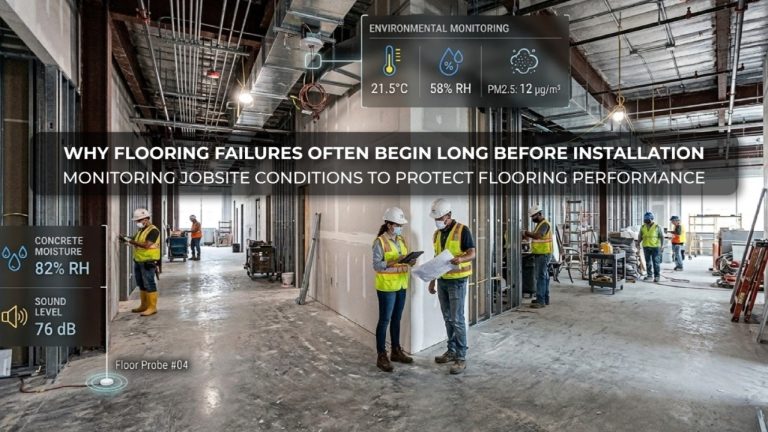
A flooring installation is scheduled, crews are assigned, and materials are ready. On paper, everything appears to be aligned. However, upon arriving on site, the team discovers that conditions are not as expected.
A previous trade is still completing work. Moisture levels are not within acceptable limits. The area is not fully prepared for installation.
Without proper visibility, these issues lead to delays, rescheduling, and additional costs.
Now compare this to a project where visibility is built into the process.
Site conditions are documented and shared in advance, Project status is updated in real time, and all stakeholders have access to the same information.
In this scenario, adjustments can be made before the team mobilizes, avoiding unnecessary disruption.
The difference is not the material or the crew. It is the availability of accurate information.

At the core of project visibility is the effective use of data.
When project data is accessible and up to date, teams are able to make more informed decisions. Risks can be identified earlier, and corrective actions can be taken before issues escalate.
For flooring, this can include:
These insights help reduce uncertainty and improve overall project performance.
It is important to recognize that technology does not replace experience. Skilled professionals still evaluate conditions, manage teams, and make critical decisions.
What technology does is support those decisions by providing better visibility.
Platforms like Salesforce create a structured environment where information is easier to access and interpret. This allows teams to operate with greater precision and reduces reliance on assumptions.
At Axis Interior Systems, flooring is approached as part of a broader project system rather than a standalone activity.
This means placing emphasis not only on installation quality, but also on coordination, planning, and communication throughout the project lifecycle.
By integrating structured tools and processes, including platforms like Salesforce, the team is able to maintain better alignment internally while also improving visibility for clients and project partners.
The result is a more informed, proactive approach to project execution.
To learn more about how Axis supports commercial projects, you can explore our services here: https://axisinteriorsystems.com/services/
As commercial construction becomes more complex, expectations around performance and accountability continue to rise.
Owners are placing greater emphasis on lifecycle outcomes. Project teams are expected to deliver with fewer delays. Coordination across trades is becoming more critical than ever.
In this environment, guesswork is no longer sustainable.
The shift toward data-driven, visibility-focused project management is not just a trend. It is becoming a necessity.
Most project challenges do not originate from a single major issue.
They develop gradually through small gaps in communication, coordination, and visibility. When these gaps go unaddressed, they can lead to delays, increased costs, and long-term performance concerns.
Improving visibility does not eliminate complexity, but it does make complexity more manageable.
And in commercial flooring, where timing, conditions, and coordination are critical, that clarity can make all the difference.
Discover additional insights on commercial flooring systems, installation methods, and performance considerations across various industries.
Copyright © 2026 IPRS Consultants. - All rights reserved.