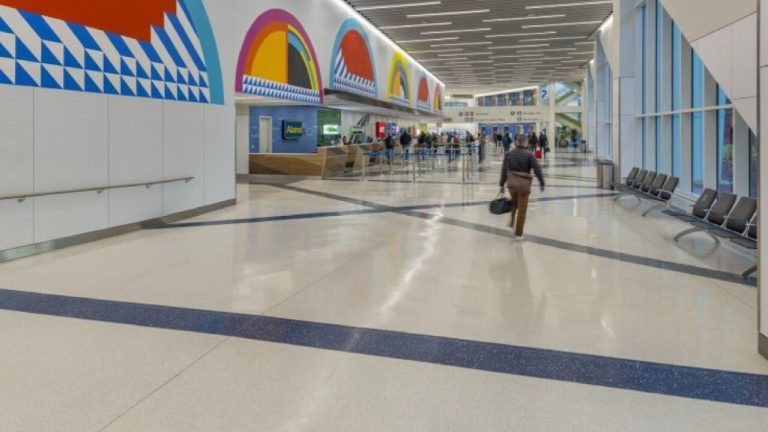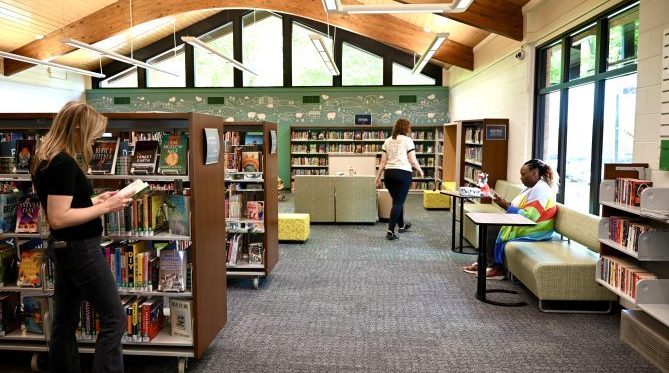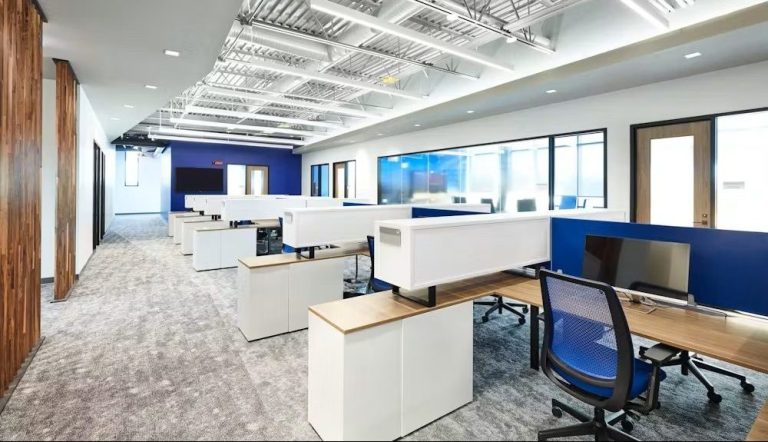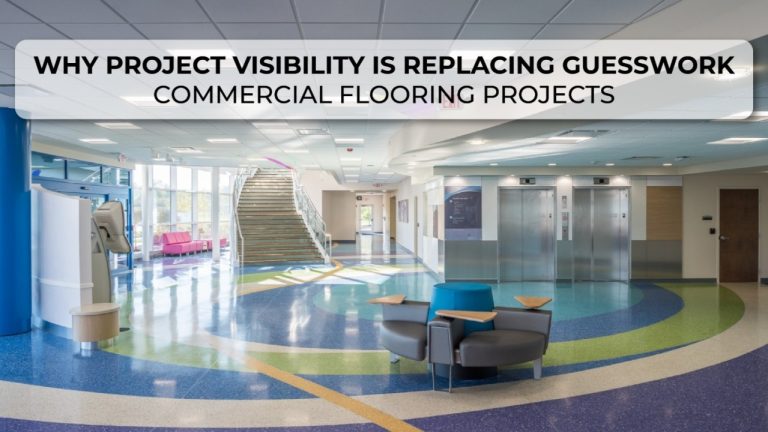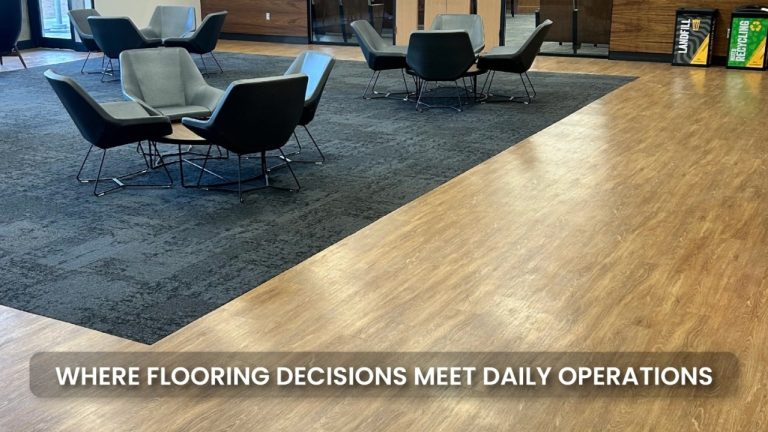
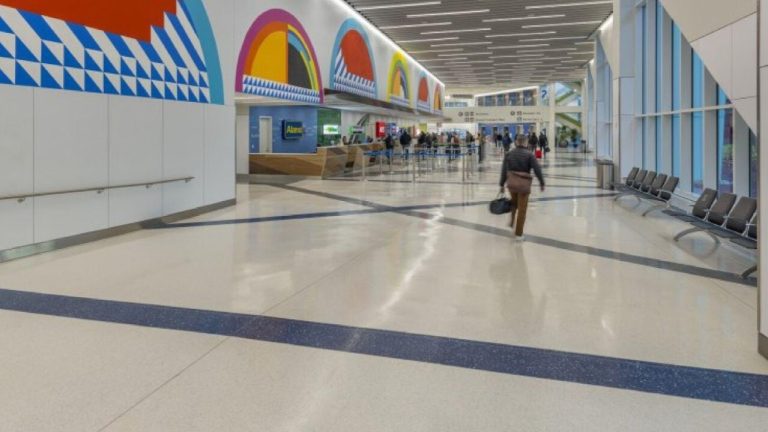
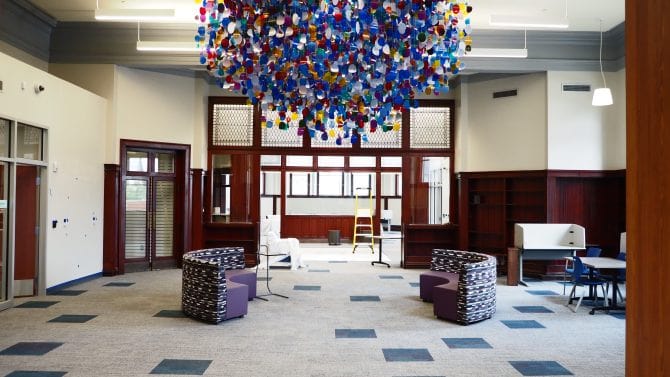
Commercial flooring installation has traditionally been evaluated by how it looks at project closeout. Today, performance expectations extend far beyond aesthetics. In government facilities, education environments, healthcare settings, and large commercial interiors, flooring must withstand constant use while meeting safety, compliance, and maintenance standards long after installation.
As commercial spaces evolve, so does the way flooring is planned and delivered. Technology is now influencing how conditions are assessed, how installations are validated, and how long-term performance risks are reduced. Flooring is no longer just a finish. It is part of a broader system shaped by data, coordination, and environmental control.
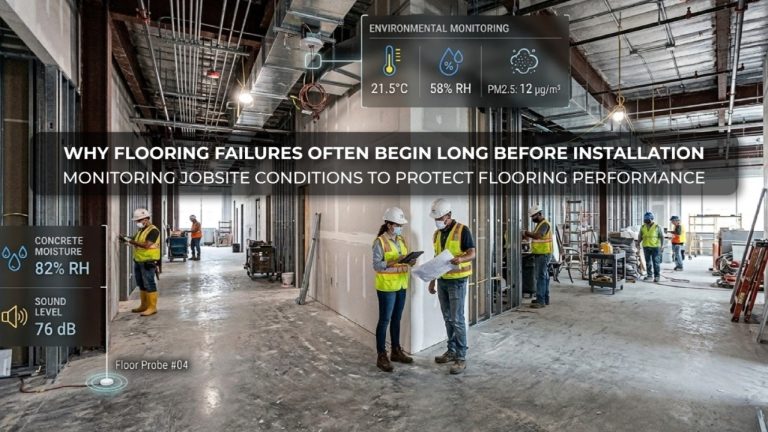
Most flooring failures are not caused by defective materials. They result from installation environments that were not fully ready. Moisture levels, temperature stability, humidity control, and substrate conditions all play a critical role in how flooring systems perform over time.
This is especially true for commonly specified commercial materials such as:
In government flooring and education flooring projects, these risks are amplified. Buildings are often large, schedules are tight, and disruptions after occupancy can be costly and difficult to manage. When installation conditions are not properly verified, issues may surface months later in the form of adhesive failure, curling, or premature wear.
Historically, installation readiness was determined through manual testing and periodic inspections. While still necessary, these methods provide only a snapshot in time. Modern commercial projects require greater continuity and documentation.
Installation readiness today increasingly includes:
For commercial floor contractors and installers, this shift allows teams to move forward with confidence rather than assumptions. Installation decisions are informed by data rather than limited observation, reducing uncertainty across complex project schedules.
As construction environments become more compressed and multi-trade coordination becomes more complex, real time environmental monitoring is emerging as a valuable support tool. These platforms capture ongoing jobsite conditions and provide visibility throughout critical installation phases.
Rather than relying solely on spot measurements, project teams can reference time-stamped data that reflects actual conditions before, during, and after installation. This level of insight supports better coordination between general contractors, commercial flooring installers, and building owners.
Technologies such as CLiMIT contribute to this approach by enabling continuous monitoring and accessible reporting of environmental conditions across active jobsites. This type of visibility helps:
More information on jobsite environmental monitoring and its application in construction can be found at https://climit.com/.
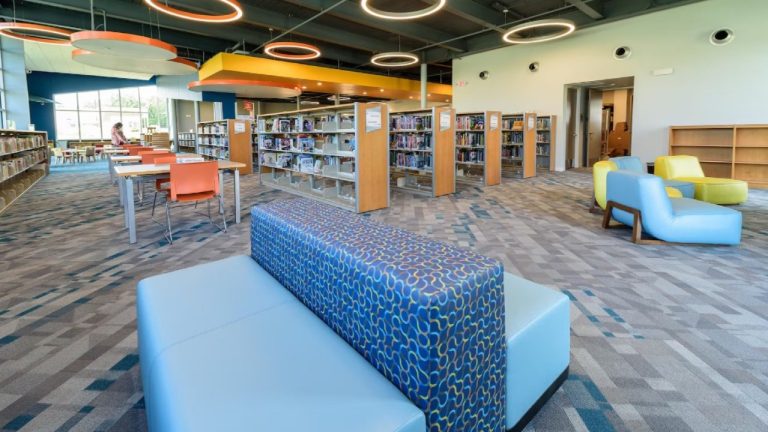
Public and institutional projects place unique demands on flooring systems. Government buildings, schools, and civic spaces require materials that balance durability, safety, and long-term cost control. While material selection is critical, performance ultimately depends on installation quality and environmental control.
In these environments, flooring must support:
Commercial vinyl flooring, epoxy flooring services, and resilient systems are frequently specified for these settings due to their performance characteristics. However, even the most durable flooring can underperform if installed under unstable conditions.
This is why government flooring projects increasingly benefit from installation strategies that emphasize preparation, documentation, and verification. Data-supported installation practices provide reassurance for stakeholders responsible for public assets and long-term facility performance.
Technology does not replace experience or craftsmanship. Instead, it enhances the expertise of professional floor installers by adding clarity and consistency to the process.
When environmental data is available and transparent, teams can:
For commercial flooring installation, this means fewer reactive decisions and more proactive planning. Technology supports better outcomes not by changing how flooring is installed, but by ensuring the conditions are right for success.
At Axis Interior Systems, flooring performance is addressed well before installation begins. Planning considers environmental readiness, sequencing, and coordination as essential components of project delivery, particularly in large-scale and public-facing environments.
This approach is especially relevant for government projects, where accountability, documentation, and durability are critical. Flooring decisions are evaluated not only for immediate functionality, but for how they will perform under sustained use.
Axis Interior Systems applies this planning philosophy across a wide range of civic and institutional environments. You can explore examples of this work in active public sector settings through Axis Interior Systems’ government projects portfolio: https://axisinteriorsystems.com/government-flooring/
By aligning installation schedules with verified site conditions, project teams are better positioned to protect timelines, reduce rework, and deliver flooring systems that perform as intended.
As construction technology continues to evolve, commercial flooring is becoming more integrated into the digital infrastructure of the jobsite. Environmental data, installation records, and performance expectations are increasingly interconnected.
This shift benefits all stakeholders:
The future of commercial flooring is not defined solely by material innovation. It is shaped by how well conditions are understood, documented, and controlled. When flooring is treated as a system supported by data and experience, it performs more reliably and delivers greater long-term value.
Commercial flooring is no longer just about selecting the right product. It is about creating the right environment for that product to succeed, today and for years to come.
Discover additional insights on commercial flooring systems, installation methods, and performance considerations across various industries.
Copyright © 2026 IPRS Consultants. - All rights reserved.