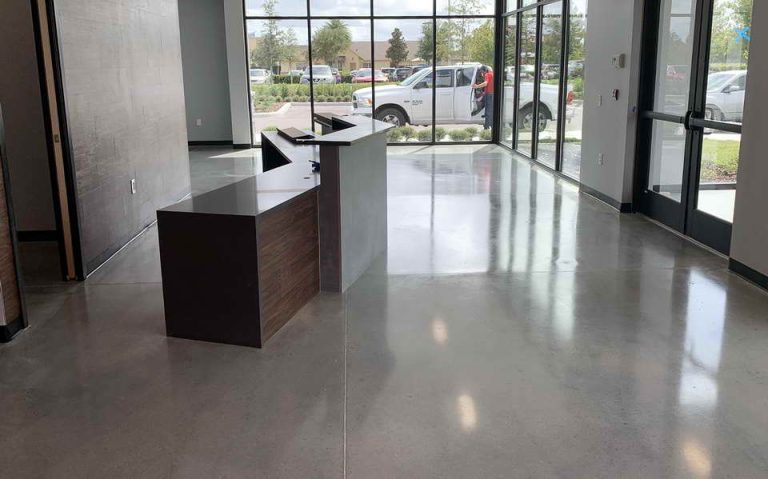
Polished Concrete Floor

Terrazzo's Comeback: Is Modern Epoxy Terrazzo Worth the Investment?

Terrazzo is back, and it isn't your grandparents' floor

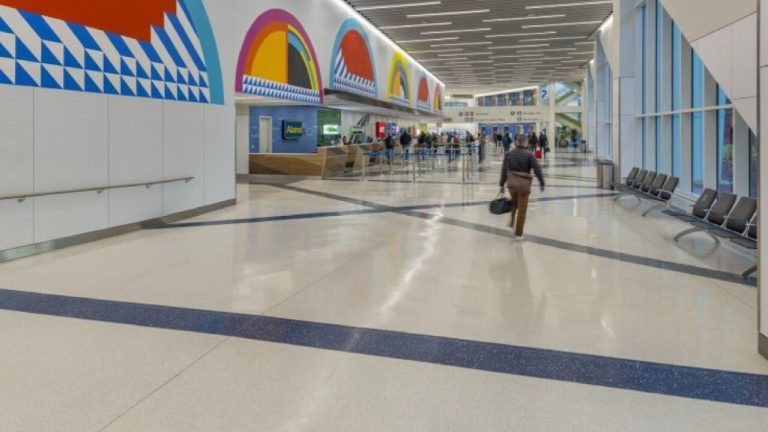
Walk through a new airport concourse, a renovated university library, or a flagship corporate lobby, and there’s a good chance you’re standing on epoxy terrazzo flooring. The speckled, polished surface that defined 1920s train stations and mid-century schools has returned as one of the most specified premium floors in commercial construction.

But today’s terrazzo is a different material. Modern epoxy systems are thinner, lighter, faster to install, and available in almost any color or pattern a designer can draw. The question facility owners ask us isn’t “Is terrazzo beautiful?” It’s “Is it worth the upfront cost?”

This guide answers that question with real performance data, so you can decide whether epoxy terrazzo belongs in your next project.

What is epoxy terrazzo?

Terrazzo is a composite floor made of decorative chips set in a binder, then ground and polished to a smooth finish. The chips can be marble, granite, quartz, recycled glass, porcelain, or mirror. Traditional terrazzo uses a cement binder; modern thin-set terrazzo uses an epoxy resin binder.

That binder change is what drove the comeback. Epoxy terrazzo is poured at a nominal 1/4″ or 3/8″ thickness, compared with 2 to 3 inches for traditional sand-cushion terrazzo. A typical 3/8″ epoxy system weighs about 3 to 4 pounds per square foot, while sand-cushion cement terrazzo weighs 25 to 30 pounds per square foot, according to the National Terrazzo & Mosaic Association (NTMA).

In practical terms, that means:

  • No depressed slab needed. Epoxy terrazzo sits on a level concrete slab, so it works in renovations where traditional terrazzo would require structural changes.
  • Upper floors are on the table. The light weight makes it practical for multi-story buildings without added structural support.
  • Faster schedules. Epoxy resin cures overnight and can be polished the next day, while traditional terrazzo can need up to a week of curing, per Concrete Network.
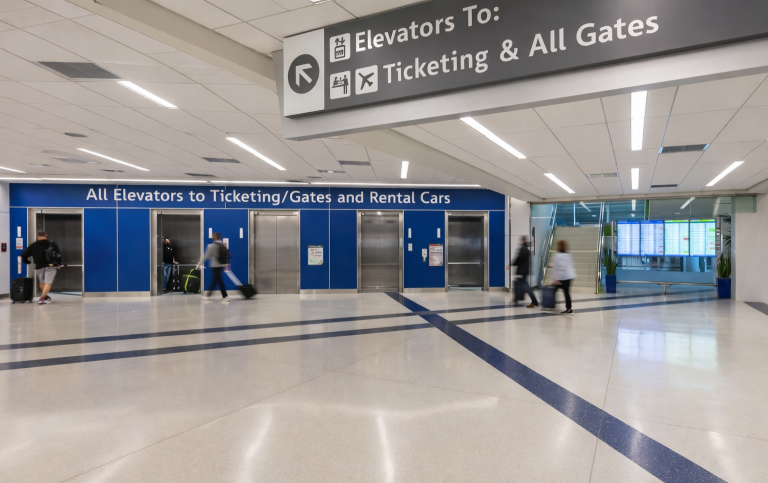
Terrazzo- CVG Airport 1

Why terrazzo is trending again

Three forces are pushing epoxy terrazzo back onto drawings across Ohio and the Tri-State.

1. Owners are thinking in decades, not budget cycles

Public owners, universities, and healthcare systems are under pressure to justify capital spending over the full life of a building. A floor that lasts 40 years or more beats one that needs replacing every 10 to 15 years, even if it costs more on day one.

2. Design teams want floors that carry the brand

Epoxy terrazzo can be poured in nearly any color, with metal divider strips forming logos, wayfinding paths, maps, or artwork. For a corporate headquarters, a transit hub, or a university student center, the floor becomes part of the identity of the space.

3. Sustainability goals reward durable, low-maintenance materials

Terrazzo can use recycled glass and porcelain chips, it rarely needs replacement, and it doesn’t require waxes or strippers. That combination helps projects chasing LEED or WELL goals reduce material waste and harsh chemical use over time.

The real cost of epoxy terrazzo: upfront vs lifetime

Epoxy terrazzo typically lasts 40+ years with no replacements, needing only neutral cleaning and periodic buffing. Commercial LVT lasts 10 to 20 years and is replaced two to three times over the same period, with periodic refinishing in between. Carpet tile lasts 7 to 15 years, needs three to five replacements, and requires regular vacuuming and extraction. Each LVT or carpet replacement means repeated disruption to the space, while terrazzo causes minimal disruption. On design, terrazzo offers custom colors, logos, and inlays, compared with printed visuals for LVT and patterns and colors for carpet tile.

Where epoxy terrazzo makes the most sense

Epoxy terrazzo shines in spaces that combine heavy traffic, high visibility, and a long ownership horizon:

  • Airports, transit stations, and public lobbies where millions of footsteps and rolling luggage would wear out lesser floors
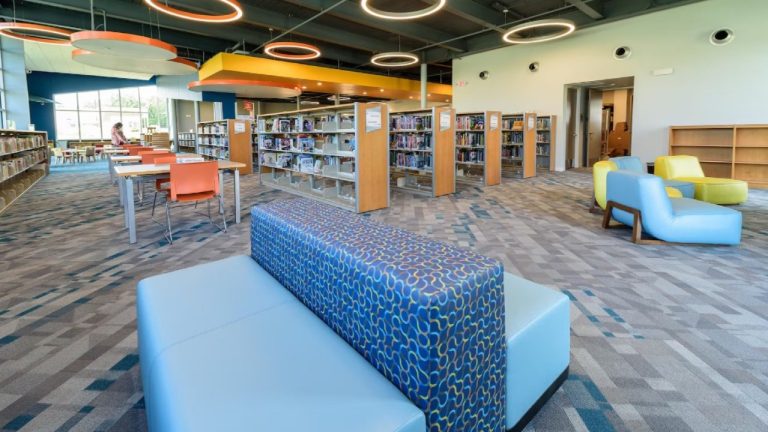
  • University student centers, libraries, and main corridors that need to look good for generations of students
  • Hospital lobbies and main concourses where cleanability and first impressions matter
  • Corporate headquarters lobbies that use the floor to express the brand
  • Government buildings, courthouses, and civic centers that are built to last 50 years or more

Axis has installed terrazzo on public-sector projects such as the ConRAC facility, where durability and long-term value drove the material decision.

When terrazzo may not be the right fit

An honest recommendation includes the limits:

  • Exterior use. Epoxy terrazzo is an interior system. Sun exposure can fade and degrade the resin, so outdoor areas call for cement-based systems or other materials.
  • Short-term leases. If a tenant will be gone in five years, the lifecycle advantage disappears.
  • Poor slab conditions. Terrazzo needs a sound, level, dry slab. Moisture problems or active cracks must be addressed first, sometimes with a crack-isolation membrane.
  • Tight schedules with no prep time. Even though epoxy cures quickly, the full process of prep, pour, grind, and polish needs proper sequencing.

How epoxy terrazzo is installed

Understanding the process helps you plan schedules and budgets:

  1. Slab assessment and moisture testing. Installers check flatness, cracks, and moisture vapor emissions before anything is poured.
  2. Surface preparation. The slab is shot-blasted or ground, and cracks are repaired or bridged with a membrane.
  3. Divider strip layout. Metal strips are set to separate colors and form patterns, logos, or control joints.
  4. Pouring and troweling. The epoxy matrix and aggregate are mixed, poured, and troweled to thickness.
  5. Grinding, grouting, and polishing. The cured surface is ground to expose the chips, grouted to fill voids, then polished to the specified finish.
  6. Sealing and handover. A penetrating sealer is applied and the maintenance team is trained on care.

Maintaining terrazzo for 40 years

Terrazzo’s maintenance routine is simple, which is part of the lifecycle savings. Daily care is dust mopping and cleaning with a pH-neutral cleaner. Periodic buffing restores shine in heavy-traffic paths. Avoid acidic or highly alkaline cleaners, which can dull the surface.

Pair the floor with a good entrance matting system to stop grit at the door. Abrasive dirt is the main cause of dulling in high-traffic lobbies.

So, is epoxy terrazzo worth it?

For high-traffic, high-visibility spaces with a long ownership horizon, the answer is usually yes. You pay more upfront for a floor that can outlast several generations of LVT or carpet, needs no waxing, and turns the floor into a design feature.

For short-term tenants, exterior areas, or budget-driven fit-outs, other commercial flooring systems will deliver better value. The key is matching the floor to how long you’ll own the space and how hard it will work.

Frequently asked questions about epoxy terrazzo flooring

Explore expert flooring solutions for healthcare facilities, from substrate preparation to durable flooring systems designed for active hospital environments.

With proper maintenance, epoxy terrazzo is commonly expected to last 40 years or more in commercial settings.

Polished terrazzo is smooth, but sealers and finishes can be selected to improve slip resistance, and entrance matting reduces wet tracking.

Epoxy terrazzo can go over sound concrete and some existing hard surfaces after proper preparation. A site assessment confirms what’s possible.

It depends on area and design complexity. Epoxy cures overnight, but prep, pouring, grinding, and polishing are sequenced over days to weeks.

Terrazzo is very durable, but cracks in the concrete slab underneath can sometimes show through the surface. Proper slab preparation, divider strips, and crack isolation methods help reduce that risk, and a site assessment can identify problem areas before installation.

Yes. It’s commonly used in high-traffic, high-visibility spaces like airports, transit stations, hospital lobbies, and university buildings. It handles heavy foot traffic and rolling loads, and its seamless surface is easy to keep clean.

Plan your terrazzo project with Axis

Axis Interior Systems has delivered commercial flooring across Ohio, Kentucky, and Indiana since 1990. Our team will assess your slab, compare terrazzo against alternatives for your traffic and budget, and give you a clear lifecycle picture.

Explore More Flooring Insights

Explore our flooring solutions, expert services, and industry insights to find the right system for your facility.

Copyright © 2026 IPRS Consultants. - All rights reserved.

Scroll to Top