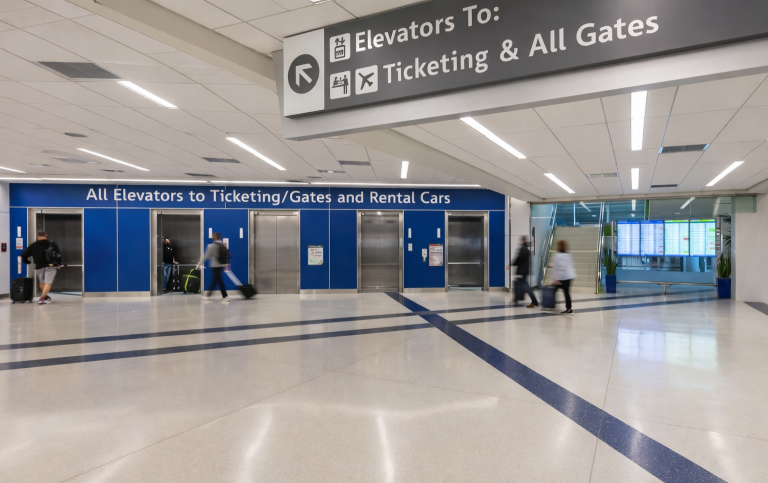
Terrazzo - Dayton Children's Hospital

How to Choose Commercial Flooring That Meets Specific Aesthetic Requirements

Introduction

Decorative flooring in a commercial setting has to do two jobs at once: it needs to look intentional, on-brand, and welcoming, while standing up to the same traffic, spills, and daily wear as any other commercial surface. Too often those two goals get treated as a trade-off, where a facility either picks the durable option and accepts a plain look, or picks the design-forward option and accepts a shorter service life. That’s rarely necessary anymore — the commercial flooring design options available today have closed most of that gap.

At Axis Interior Systems, we’ve helped clients across Ohio, Kentucky, and Indiana balance design intent with real-world performance for more than 30+ years in commercial flooring. This guide covers how to think through commercial flooring options when aesthetics genuinely matter — brand identity, hospitality, retail, and corporate lobbies — without compromising on durability.

Why Aesthetic Requirements Deserve Their Own Conversation

Flooring decisions in most commercial spaces start with performance criteria — traffic level, moisture exposure, maintenance budget — and treat appearance as a secondary filter applied to whatever passes the durability test. For spaces where design genuinely drives the business outcome — a retail flagship store, a hotel lobby, a corporate headquarters meant to impress clients — that order needs to flip, or at least run in parallel from the start.

A floor is one of the largest visible surfaces in any commercial interior, and it sets tone before a single piece of furniture or signage does. Getting the decorative flooring decision right isn’t a finishing touch; it’s part of how the space communicates who occupies it.

Matching Decorative Flooring to Brand Identity

Start with the brand’s existing visual language, not the flooring catalog. Color palette, material tone (warm vs. cool, natural vs. industrial), and the level of pattern complexity a brand already uses in its logo, signage, and marketing should inform the flooring search — not the other way around. A flooring product chosen first and reconciled with brand identity later tends to feel like an afterthought.

Consider how the floor reads at scale. A pattern or color that looks balanced on an 8-inch sample can read very differently across a 3,000-square-foot showroom floor. Requesting a larger sample board, or seeing an installed reference project in person, avoids a mismatch discovered only after installation.

Decide how much the floor should compete with everything else in the room. In retail especially, a highly patterned or high-contrast decorative floor can either showcase merchandise beautifully or visually compete with it, depending on execution. A calmer field with an accent border or transition detail often serves merchandising better than an all-over bold pattern.

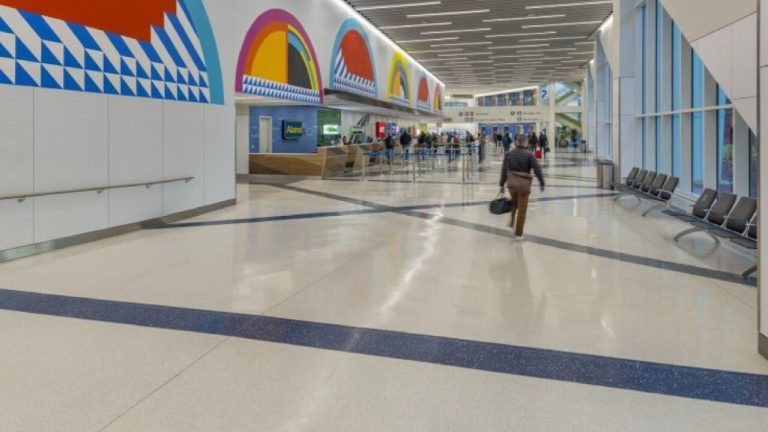
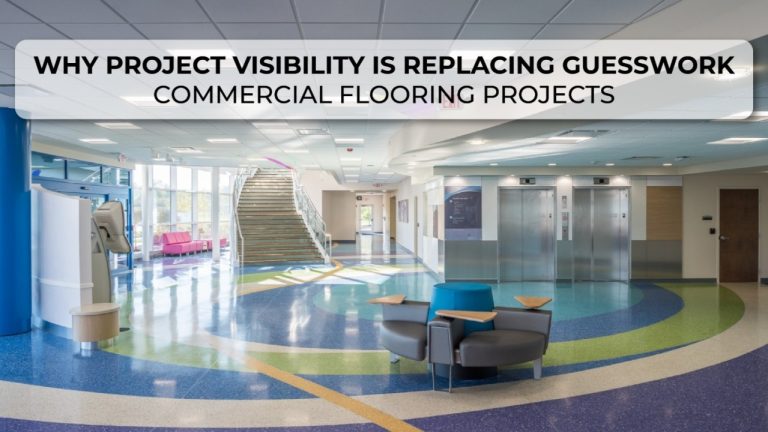
Terrazzo - Dayton Childrens Hospital

Commercial Flooring Options That Balance Design and Durability

Luxury vinyl tile (LVT) and luxury vinyl plank (LVP). Modern LVT reproduces wood, stone, and concrete visuals convincingly while offering commercial-grade wear layers and straightforward maintenance. It’s often the most flexible decorative flooring option available, since manufacturers offer extensive color and pattern libraries without sacrificing performance.

Terrazzo. For lobbies and high-visibility entries meant to last decades, terrazzo offers essentially unlimited design flexibility through aggregate color, size, and pattern, while delivering some of the longest service life of any commercial flooring system. The upfront cost is higher, but so is the design payoff for spaces meant to make a lasting impression.

Patterned and colored resinous flooring. Epoxy and polyurethane systems can incorporate color flake, metallic pigments, or custom logos directly into the floor, which works well for showrooms, athletic facilities, and brand-forward retail environments that want something no off-the-shelf product can replicate.

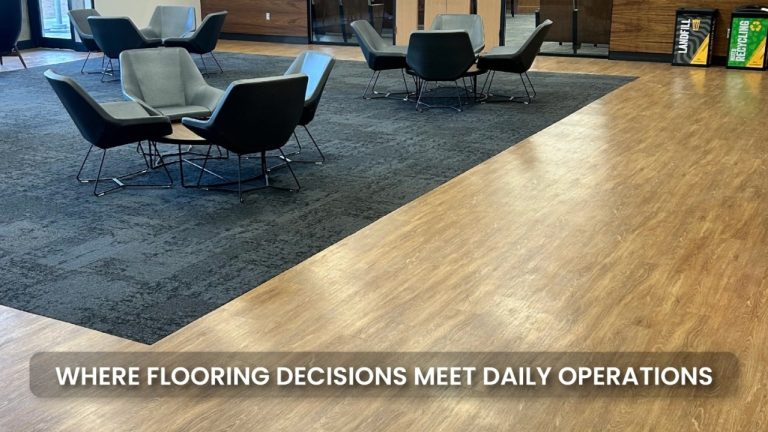
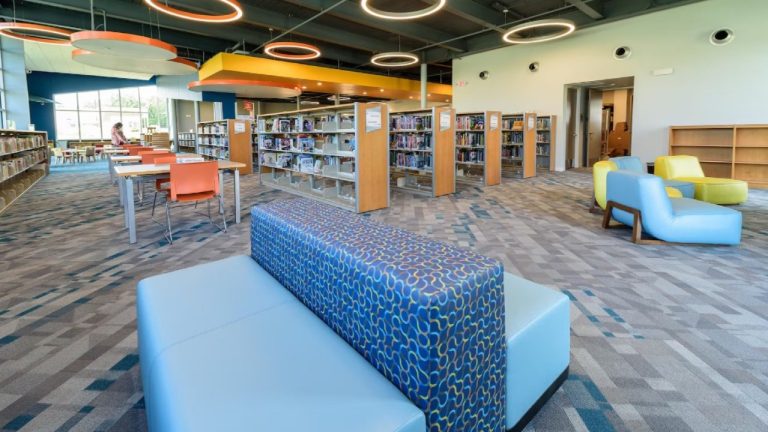
Carpet tile with custom colorways. Commercial carpet manufacturers increasingly offer extensive custom color and pattern programs, including the ability to incorporate brand colors directly. It remains one of the most design-flexible options for corporate offices and hospitality common areas where acoustics also matter.

Porcelain and ceramic tile. Large-format porcelain in particular has expanded dramatically in decorative range, including convincing stone and concrete visuals, and holds up well in higher-traffic retail and hospitality applications.

How to Choose Flooring Color Without Regretting It Later

Color is usually the single decision that generates the most back-and-forth on a decorative flooring project, and a few practical habits help avoid a costly do-over:

View samples under the space’s actual lighting, not a showroom’s lighting — fluorescent, LED, and daylight all shift how a color reads, sometimes dramatically. It’s also worth checking current color direction from a source like Pantone’s color trend reports when a client wants a palette that feels current rather than dated within a few years.

  • Test the color against the largest adjacent surfaces already committed — wall paint, millwork, ceiling treatment — rather than in isolation
  • Favor colors and patterns that hide soiling between cleanings in high-traffic zones, and reserve the boldest choices for lower-traffic accent areas
  • Confirm the color is available in the wear-rated or slip-rated version needed for the space — the most photogenic option in a sample book isn’t always available in every performance tier

Where the Trade-Offs Still Exist

Design flexibility has expanded enormously, but a few honest trade-offs remain worth knowing before committing:

Highly custom colors and patterns often carry longer lead times. A stock LVT color ships in weeks; a fully custom terrazzo aggregate blend or a bespoke carpet colorway can take considerably longer. Building that into the project timeline early avoids a scramble later.

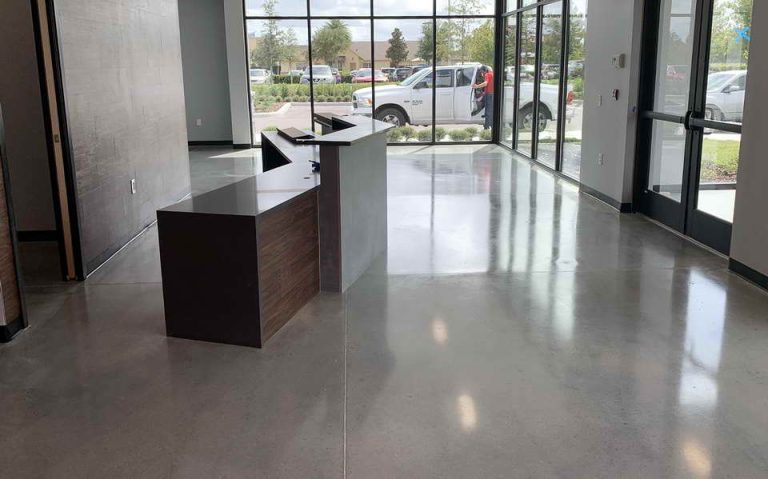
The most design-forward finishes sometimes trade off against the easiest maintenance. A glossy, high-contrast decorative floor shows dust, scuffs, and cleaning streaks more readily than a matte, mid-tone finish. This is worth discussing honestly with whoever manages daily upkeep before finalizing a choice.

Budget and design ambition still need to be reconciled early. The gap between a stock decorative product and a fully custom one can be significant, and it’s far easier to right-size ambition against budget during design than to value-engineer a beloved concept down after a client has already seen renderings.

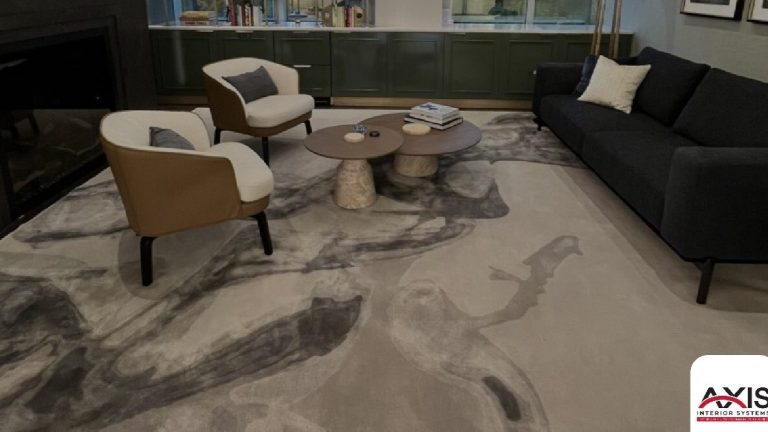
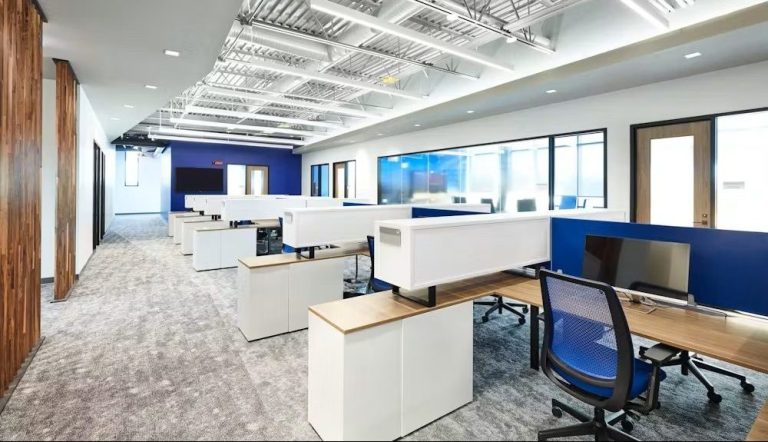
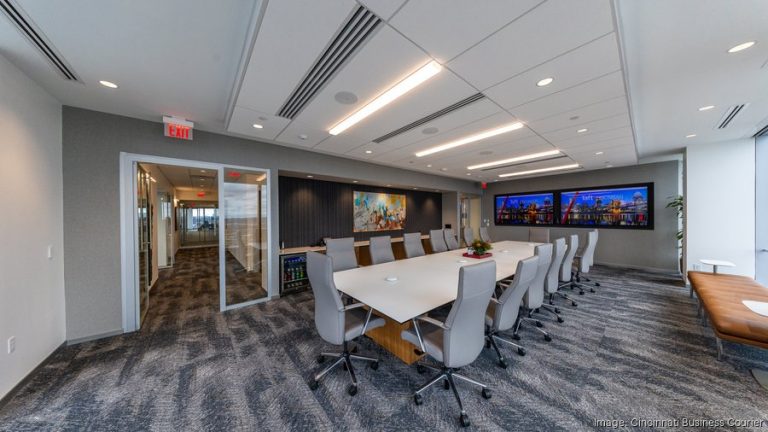
Corporate office with branded patterned flooring

Aesthetic Priorities by Sector

Design requirements shift meaningfully depending on who’s walking through the space, and it’s worth naming those differences explicitly before landing on a product.

Retail. The floor needs to support merchandising rather than compete with it, while still reflecting brand identity at the entrance and checkout zones where customers form their first impression.

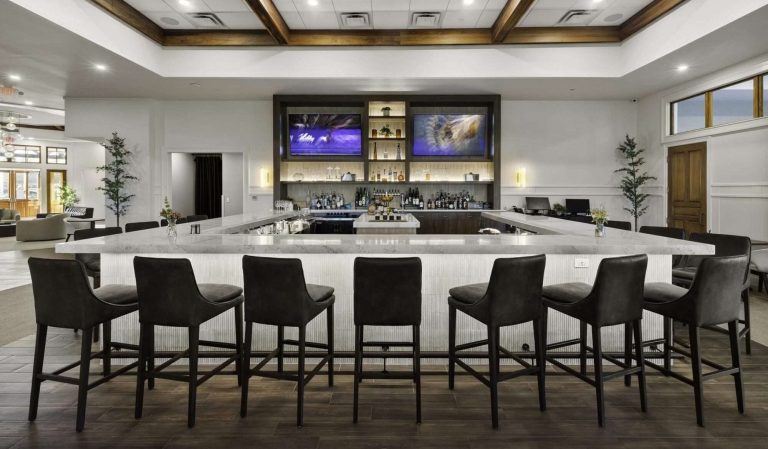
Hospitality. Lobbies and public areas typically carry the boldest design statement in the building, while guest corridors and back-of-house areas shift toward practicality — the aesthetic budget concentrates where guests actually spend time.

Corporate offices. Reception and client-facing areas usually get the design investment, while open office and back-office areas favor durability and acoustic performance over visual statement-making.

Healthcare. Aesthetic goals have to work within genuine clinical constraints — calm, non-institutional color in waiting areas, but never at the expense of the infection control and wayfinding requirements that clinical spaces demand. Design here is about warmth within real limits, not a free hand.

Frequently Asked Questions

Find answers to common questions about commercial flooring, design, durability, and specifications.

Flooring selected and specified with visual design as a primary consideration — color, pattern, texture, or custom detailing — while still meeting the durability and maintenance requirements of its commercial setting.

LVT and LVP generally offer the widest range of colors and patterns at accessible price points, while terrazzo and custom resinous flooring offer the highest level of true customization for statement spaces.

View samples under the space’s actual lighting conditions, test against other finishes already selected, and favor patterns that hide soiling in high-traffic areas while saving bolder choices for lower-traffic accents.

It depends on the level of customization. Stock decorative products in popular materials like LVT often cost about the same as non-decorative options in the same category; fully custom terrazzo, resinous, or carpet programs typically carry a premium.

Yes. Most decorative commercial flooring today is manufactured to the same wear layer and traffic-rating standards as non-decorative commercial products — the design elements don’t inherently compromise durability, though maintenance visibility can vary by finish.

Earlier than for stock products. Custom colorways, aggregate blends, or logo work typically require longer manufacturing lead times, so building that into the project schedule during early design avoids delays later.

Work With a Contractor Who Balances Design and Performance

We help clients across corporate, retail, hospitality, and healthcare spaces choose flooring that balances design, durability, and budget.


Explore More Flooring Insights

Explore our completed commercial flooring projects and see how we deliver durable, design-focused solutions across different industries.


Copyright © 2026 IPRS Consultants. - All rights reserved.

Copyright © 2026 IPRS Consultants. - All rights reserved.

Scroll to Top