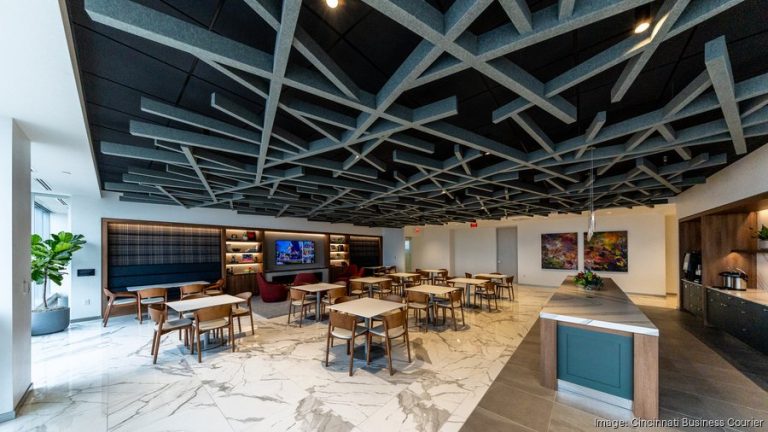
Porcelain vs ceramic tile | Taft Law Firm

Lifecycle Cost Analysis - Why the Lowest Flooring Bid Isn't Always the Best Value

What Is a Commercial Walk-Off Mat System?

Commercial walk-off mats are engineered entrance flooring solutions designed to capture dirt, moisture, and debris from footwear before they reach interior floors. These high-performance commercial entrance mats help maintain cleaner facilities, reduce floor maintenance costs, and improve safety in busy environments. Ideal for offices, healthcare facilities, schools, retail stores, and corporate buildings, walk-off matting systems provide an effective barrier against tracked-in contaminants. Properly specified entrance matting can significantly reduce cleaning demands while extending the lifespan of interior flooring and creating a cleaner, more professional entryway for visitors and employees.

Custom Logo Entrance Mats

Custom logo commercial entrance mats help corporate offices, hotels, and retail spaces improve cleanliness while reinforcing brand identity. These high-performance mats control dirt and moisture, creating professional entrances that enhance appearance, support safety, and deliver lasting durability.

Best for:

  • Corporate lobbies 
  • Hotels
  • Branded retail environments 
  • Showrooms

Hybrid Scraper Systems

Dual-action fiber entrance mats combine scraping and brushing performance to remove dirt, mud, gravel, and debris effectively. Ideal for schools, warehouses, and mixed indoor-outdoor environments, these mats provide enhanced contaminant control and help maintain cleaner, safer commercial entrances.

Best for:

  • Schools 
  • Warehouses
  • Mixed-use entrances 
  • High-debris environments

Modular Entrance Tiles

Interlocking modular mat tiles provide flexible entrance matting solutions for large vestibules, shopping centers, and corporate facilities. Designed for custom sizing and ADA-compliant transitions, these durable tiles allow easy replacement of individual sections, reducing maintenance costs and extending system lifespan.

Best for:

  • Shopping centers 
  • Large corporate lobbies
  • Airports
  • Modular coverage requirements

Carpet Walk-Off Mats

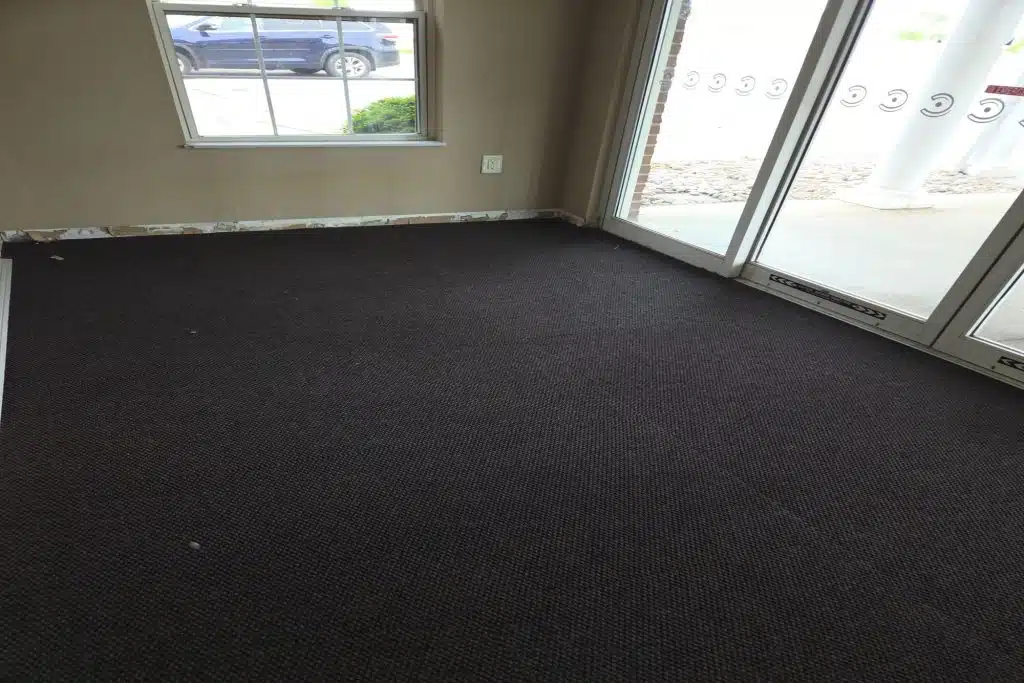
Walk-off carpet mats are ideal for commercial entrances, including offices, stores, healthcare, and schools. Their textile fibers absorb moisture and trap dirt effectively, helping maintain cleaner floors. Available in rolls, mats, and tiles, they provide durable entrance protection.

Best for:

  • Corporate offices 
  • Retail stores 
  • Hotel lobbies 
  • Healthcare reception 
  • School entrances

Rubber Walk-Off Mats

Rubber entrance mats provide exceptional durability for commercial entrances exposed to road salt, chemicals, debris, and harsh weather conditions. Their scraper surface removes dirt effectively, making them ideal for exterior areas, loading docks, and industrial facilities while offering long-lasting performance.

Best for:

  • Exterior entrances 
  • Loading docks 
  • Industrial facilities 
  • School exterior doors

Recessed Entrance Matting

Recessed pit matting systems provide a complete solution for high-traffic commercial entrances such as airports, hospitals, and corporate facilities. Installed flush with the floor, they trap dirt and moisture, improve safety, support ADA compliance, and maintain a clean appearance.

Best for:

  • Hospital main entrances ·
  • Airport terminals 
  • Large retail centers 
  • Corporate headquarters 
  • Stadiums

Introduction

Government procurement traditionally emphasizes lowest initial cost, often resulting in selections that prove expensive over facility lifespans. Flooring decisions particularly benefit from lifecycle cost analysis (LCA), which evaluates total ownership expenses rather than focusing exclusively on purchase and installation prices. Understanding how to conduct comprehensive LCA helps procurement professionals make financially sound decisions delivering superior value.

This guide examines lifecycle cost analysis methodology, demonstrates how lowest bids often mask poor value, and provides tools for evaluating flooring options on total cost of ownership. Government agencies implementing LCA-based procurement can significantly improve financial outcomes while ensuring flooring investments deliver reliable performance.

Components of Lifecycle Cost Analysis in Modern Commercial Flooring

Comprehensive LCA examines all costs associated with flooring ownership across its entire lifespan, typically 10-20 years depending on material selection. Key cost components include:

  • Material costs (price per square foot)
  • Installation labor and related expenses
  • Initial surface preparation and substrate treatment
  • Routine maintenance (cleaning, protective treatments)
  • Periodic refinishing, restoration, or renewal
  • Repairs addressing damage or wear
  • Facility downtime and operational disruption costs
  • End-of-life disposal or replacement
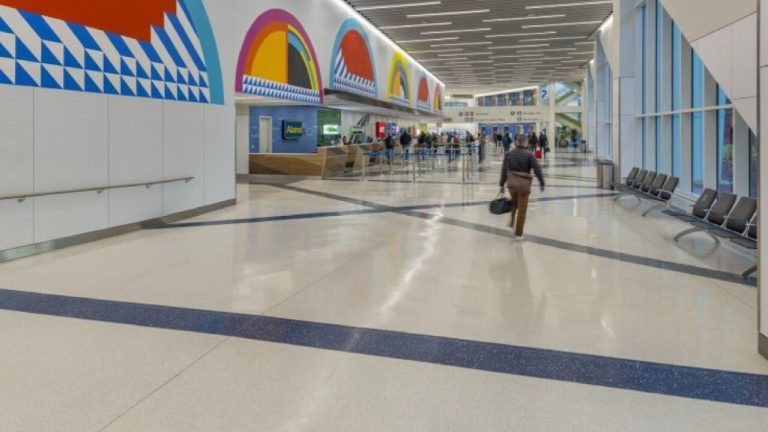
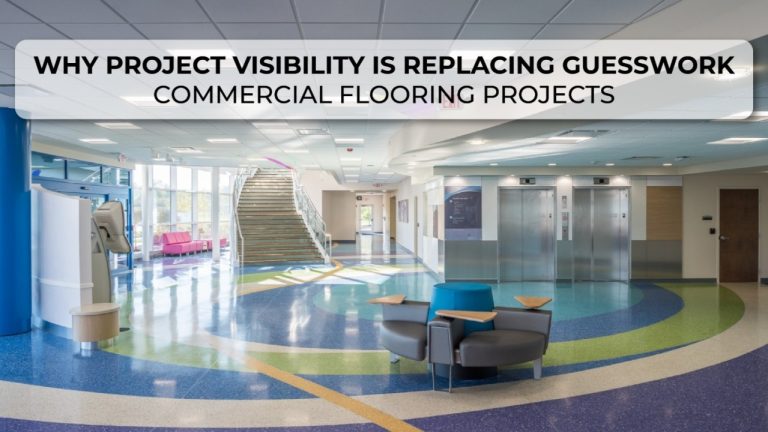
Terrazzo - CVG ConRac

Calculating Maintenance and Repair Costs

Initial material costs represent only a portion of flooring lifetime expenses. Maintenance and repair costs often equal or exceed installation expenses, particularly for products requiring frequent intervention. Accurate LCA requires realistic estimates of maintenance intensity.

Budget estimates should reflect historical data from similar facilities. A budget 5,000-square-foot government office building with 3,000 daily visitors and current carpet flooring requiring professional cleaning twice annually and shampooing quarterly incurs substantial maintenance expenses. Replacing this with polished concrete requiring only regular sweeping and occasional damp mopping reduces maintenance costs by 70% or more.

Procurement professionals should research and document typical maintenance requirements for each flooring option being evaluated. Manufacturer technical data, industry standards, and case studies of similar installations provide realistic baseline estimates. Conservative cost estimates account for realistic labor expense inflation and rising utility costs over the analysis period.

Accounting for Replacement Cycles

Different flooring materials have dramatically different expected lifespans. Accurately modeling replacement cycles distinguishes between options significantly over 15-20-year analysis periods. Low-quality carpet might require replacement every 5-7 years, while commercial-grade vinyl lasts 10-15 years and polished concrete can last 20-30+ years with proper maintenance.

LCA models should include multiple replacement cycles where applicable. A lowest-bid selection requiring complete replacement three times during an analysis period incurs substantially higher total costs than a premium option installed once and maintained rather than replaced. Present models showing cumulative expenditures across time horizons to illustrate these differences.

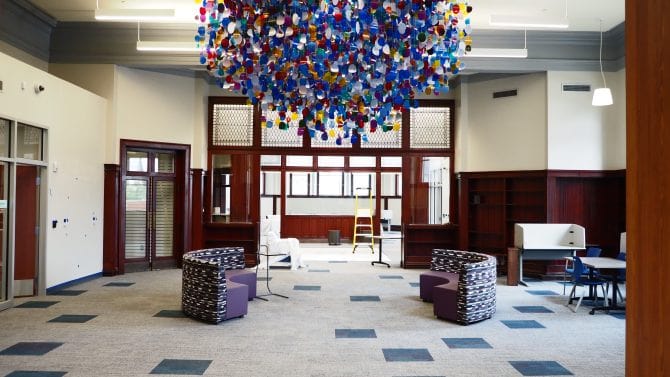
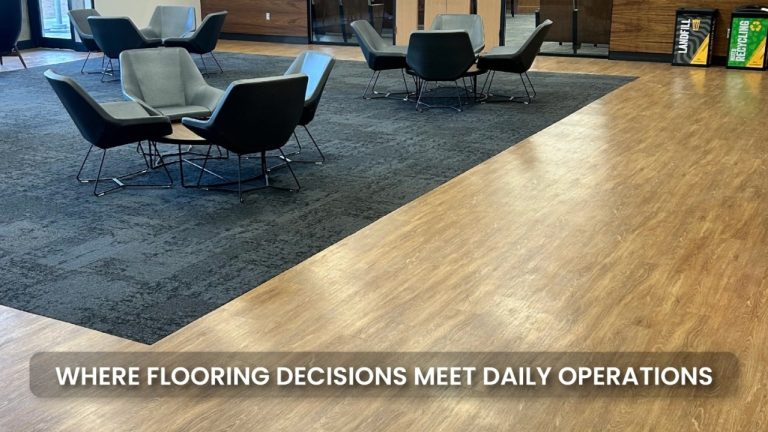
Carpet Tile -Miami University

Incorporating Operational Disruption Costs

Flooring maintenance and replacement activities require facility closures or operational disruptions. Government buildings providing public services face substantial costs when closed or operating with reduced capacity. Maintenance frequency directly impacts operational expenses.

Flooring requiring annual refinishing or periodic stripping and waxing necessitates repeated closures. Each closure represents lost productivity, rescheduled operations, and potential public service impacts. Materials requiring infrequent maintenance minimize disruption costs. While challenging to quantify precisely, acknowledging these costs in LCA models improves decision quality by reflecting operational realities.

Case Study: Comparing Flooring Options

Consider a 10,000-square-foot government office area requiring flooring replacement. Three options are evaluated over a 15-year period:

Option A - Budget Vinyl Composition Tile (VCT):

  • Material and installation: $20,000
  • Maintenance (stripping/waxing, 2x annually): $4,000/year × 7 = $28,000
  • Replacement at year 8: $20,000
  • Maintenance for replaced floor (years 8-15): $4,000/year × 7 = $28,000
  • Total 15-year cost: $96,000

Option B - Commercial-Grade Luxury Vinyl:

  • Material and installation: $35,000
  • Maintenance (regular cleaning): $800/year × 15 = $12,000
  • No replacement needed within 15-year period
  • Total 15-year cost: $47,000

Option C - Polished Concrete with Sealant:

  • Material and installation: $25,000
  • Maintenance (regular cleaning): $400/year × 15 = $6,000
  • Sealant reapplication at year 8: $5,000
  • No full replacement needed
  • Total 15-year cost: $36,000

Implementing LCA in Government Procurement

Procurement professionals should modify RFP requirements to request pricing for both initial installation and projected maintenance costs. Include a lifecycle cost model in procurement documentation, inviting vendors to provide data supporting accurate projections. Develop evaluation criteria weighting lifecycle costs alongside other factors including performance, aesthetics, and environmental considerations.

Present findings to decision-makers in terms of total cost of ownership over facility planning horizons. Lifecycle cost analysis demonstrates fiscal responsibility and supports budget transparency. Where regulations require lowest-cost selection, document that LCA represents the true lowest cost, supporting compliance with legislative intent if not strict wording.

Conclusion

Lifecycle cost analysis reveals that lowest-bid flooring selections often represent poor financial decisions generating substantially higher lifetime costs than premium alternatives. Comprehensive evaluation examining maintenance, repair, replacement, and operational disruption expenses demonstrates superior value of durable, low-maintenance flooring. Government procurement professionals adopting LCA-based decision processes achieve better financial outcomes while ensuring facility investments deliver reliable, cost-effective performance. Axis Interior Systems helps government agencies conduct comprehensive lifecycle cost analyses supporting informed procurement decisions. Maximize flooring value with lifecycle cost analysis. Contact Axis Interior Systems for comprehensive LCA support.

Ready to Upgrade Your Facility's Flooring?

Partner with Axis Interior Systems for durable, cost-effective, and compliant commercial flooring solutions tailored to government and public sector facilities.


Explore More Flooring Insights

Discover additional insights on commercial flooring systems, installation methods, and performance considerations across various industries.

(513) 645-1110

estimating@axisinteriorsystems.com

12 Kiesland Ct, Hamilton, OH 45015

Copyright © 2026 IPRS Consultants. - All rights reserved.

Scroll to Top