Carpet tile is the most common floor in commercial offices for good reason. It is modular, quiet, quick to install in phases, and a single damaged tile can be replaced in minutes. But two buildings using the exact same carpet tile can end up looking completely different, and lasting very different lengths of time, because of two decisions made before the first box is opened: how the tiles are attached, and which pattern they are laid in.
Axis Interior Systems has installed commercial carpet tile in offices, schools, hotels, hospitals and public buildings across Ohio, Kentucky and Indiana for more than 30 years. This guide explains the main carpet tile installation methods, the most popular patterns and when to use each, and the preparation steps that decide whether a carpet tile floor still looks good years from now.
Broadloom carpet still has its place, but carpet tile has become the standard choice for most corporate offices and education projects. The reasons are practical:
Every carpet tile product comes with installation instructions from its manufacturer, and the warranty depends on following them. Within those instructions, these are the methods you will see most often.
Pressure-sensitive adhesive is applied across the floor and left tacky before installation. It holds carpet tiles securely under foot traffic and rolling chairs while allowing easy replacement, making it ideal for offices, schools and public buildings.

Connector tabs join tiles beneath their corners, creating one large mat without applying adhesive to the floor. This fast, low-odor installation method suits occupied buildings and allows easy removal when replacement is needed.

Some products come with an adhesive already applied to the back, protected by a release film. These are quick to install but are best suited to specific products and conditions, so check the manufacturer’s limits for subfloor type and moisture.

Ramps, areas with heavy rolling loads such as mail carts or hospital equipment, and other demanding spots may call for a stronger adhesive recommended by the manufacturer. The trade-off is that tiles in these areas are harder to lift later.

Whatever the method, warranty terms also depend on correct installation. Our guide to commercial flooring warranties explains what is usually covered and what isn’t.
Most carpet tiles have an arrow printed on the back to show the direction of the pile. The pattern is simply the way the installer turns those arrows as the tiles go down. The same product can look completely different depending on the pattern chosen.
All arrows point in the same direction. The result looks closest to broadloom carpet, with a smooth, uniform look across the room. It works well for solid or subtle styles in boardrooms and private offices. The downside is that any slight color difference between tiles is easier to see.
Each tile is turned 90 degrees from the one next to it, creating a soft checkerboard texture. Quarter-turn installation hides seams well and makes small differences between tiles less noticeable, which is why it is one of the most popular choices for large open offices.
Tiles are turned in alternating directions and each row is offset by half a tile. Ashlar breaks up long straight seam lines and gives a more textured, less grid-like look. It is common in corridors and collaborative areas.
Every tile points in the same direction, but each row is offset by half a tile, like a brick wall. It gives a subtle linear look that can make a narrow space feel longer.
Herringbone uses rectangular plank-shaped carpet tiles laid in a zigzag. It creates a striking, high-end look for reception areas, executive suites and hospitality spaces. It takes more time to lay out and cut, and produces more offcuts, so it is usually saved for feature areas.
Some styles are designed so the tiles can be laid in any direction. Because any tile fits anywhere, installation is faster, there is less waste, and replacing a damaged tile is easy. This makes non-directional styles a smart choice for high-traffic corridors and spaces that see frequent changes.
Many projects combine patterns, for example herringbone planks in the reception area and quarter-turn tiles in the open office, with a clean transition between them. Always confirm which patterns the manufacturer approves for the style you have chosen.
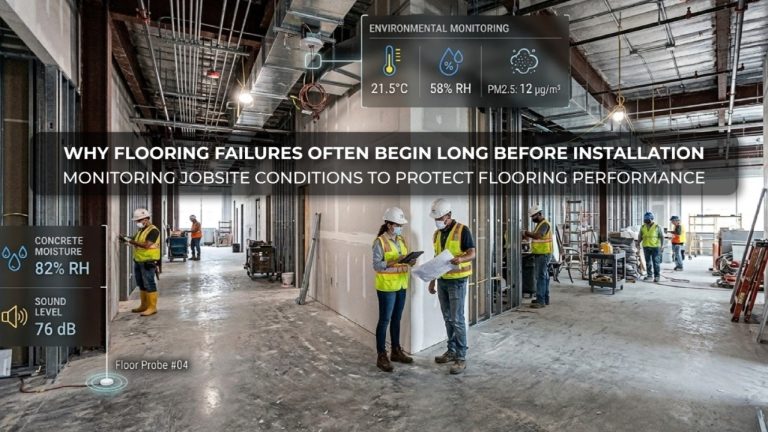
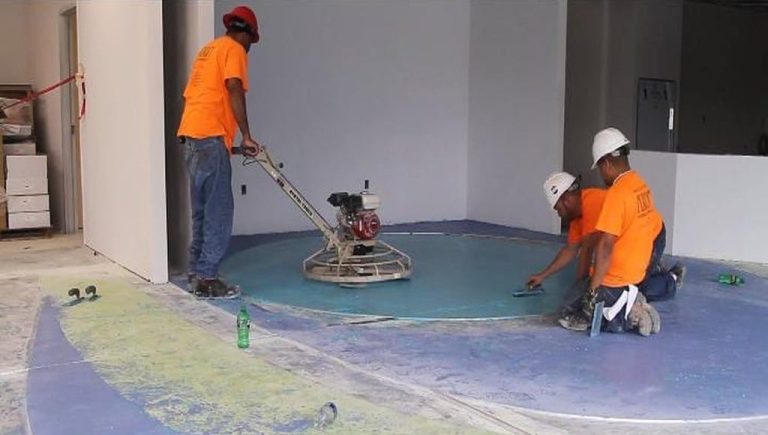
Most carpet tile failures, such as tiles lifting, curling edges, adhesive odors or visible ridges, trace back to the floor underneath rather than the carpet itself. A good installer checks these before installation begins:
Our demolition and floor preparation team handles flooring removal, grinding and leveling so the new floor starts on a sound base.
One of carpet tile’s biggest advantages is that it can be installed while a building is in use. Work can be phased room by room or floor by floor, scheduled after hours or on weekends, and done with low-odor adhesives. In offices, special lifting equipment can raise desks and workstations in place, so the old floor can be removed and new tiles installed underneath without fully moving the furniture or disconnecting computers.
Read more about how we plan these projects in our guide to installing flooring in occupied buildings.
For most commercial spaces, a full-spread releasable adhesive is the standard choice because it holds tiles firmly but lets them be replaced later. Adhesive-free connector systems are a good option for occupied buildings when the manufacturer approves them.
In a monolithic installation all tiles face the same direction for a smooth, broadloom-like look. In a quarter-turn installation each tile is turned 90 degrees from its neighbor, creating a checkerboard texture that hides seams and small color differences.
The arrow shows the direction of the pile. Installers use it to create the chosen pattern, such as pointing all arrows the same way for monolithic or turning them for quarter-turn.
Sometimes. Some manufacturers allow carpet tile over certain well-bonded hard floors after proper preparation, but it should never go over existing carpet. Always check the manufacturer’s instructions and test the existing floor first.
It depends on the product, traffic and maintenance. Because individual tiles can be replaced, a well-maintained carpet tile floor can often stay in service longer than broadloom in the same space.
Keeping a small percentage of extra tiles from the same dye lot is good practice. Your installer can recommend an amount based on the size of the space and how busy it is.
Axis Interior SysteWe help you choose the right installation method and pattern for each space, prepare the subfloor properly, and phase the work around your schedule.
Discover more of our flooring projects and see how we transform commercial spaces with quality materials, expert installation, and lasting results.
Copyright © 2026 IPRS Consultants. - All rights reserved.