Terrazzo restoration before and after polishing

Terrazzo Restoration: How Worn Terrazzo Floors Are Brought Back to Life

Introduction

Terrazzo is one of the few floors built to outlast the building it sits in. Many schools, courthouses, hospitals, libraries and office lobbies across Ohio, Kentucky and Indiana still have terrazzo floors installed 50 or more years ago. Some are dull and yellowed, some are cracked, and some are hidden under carpet or vinyl tile that was laid over them decades ago.

In most cases, an old terrazzo floor doesn’t need to be replaced. It needs terrazzo restoration. With the right process, a worn terrazzo floor can look close to new again and go on serving the building for many more years.

Axis Interior Systems is a member of the National Terrazzo and Mosaic Association (NTMA) and has been installing and caring for terrazzo flooring for more than 30 years. This guide explains how terrazzo restoration works, what can and can’t be repaired, and how to keep a restored floor looking its best.

Signs Your Terrazzo Needs Restoration

Terrazzo wears slowly, but the signs build up over time:

  • A dull, cloudy or yellow finish. This is often caused by layers of old wax or acrylic floor finish rather than the terrazzo itself.
  • Stains from rust, ink, coffee, chemicals or old adhesives.
  • Cracks, especially along divider strips or where the concrete slab underneath has joints.
  • Loose or missing divider strips, chips and small holes.
  • Uneven edges between sections, which can be a trip hazard.
  • Old patches that don’t match, such as concrete or the wrong color of filler from previous repairs.
Worker applying flooring material to a commercial subfloor.

Cement vs. Epoxy Terrazzo: Why the Type Matters

Before any work starts, it is important to know which kind of terrazzo you have, because each is restored differently.

Cement terrazzo is the traditional type, found in most older buildings. It is thicker, made with a cement binder, and slightly porous, so it needs a penetrating sealer to resist stains. Repairs use cement-based or compatible fillers matched to the original.

Epoxy terrazzo became common from the 1970s onward. It is thinner, made with a resin binder, and non-porous, with a much wider range of colors. Repairs use color-matched epoxy. Learn more in our guide to epoxy terrazzo flooring.

The Terrazzo Restoration Process, Step by Step

Every floor is different, but a full restoration usually follows these steps.

1. Assessment and test area

The contractor identifies the type of terrazzo, maps cracks, stains and damaged areas, and often restores a small test area first. This shows how the floor responds and what finish level can be expected, so there are no surprises.

2. Stripping old wax and coatings

Years of wax and acrylic floor finish are removed. These coatings are often the main reason a terrazzo floor looks yellow or dirty, and they hide the real color of the stone chips underneath.

3. Repairs

  • Cracks are cleaned out and filled with a color-matched filler.
  • Missing or loose divider strips are replaced or re-secured.
  • Holes, chips and old mismatched patches are filled with a mix designed to match the original color and stone chips.

Color matching is a craft. A good restoration contractor mixes and tests samples until the repair blends into the surrounding floor.

4. Grinding

A floor machine with diamond abrasives grinds the surface flat, removing uneven edges, deep scratches, stains and the top layer of worn material. This step reveals fresh, clean stone chips.

5. Honing and polishing

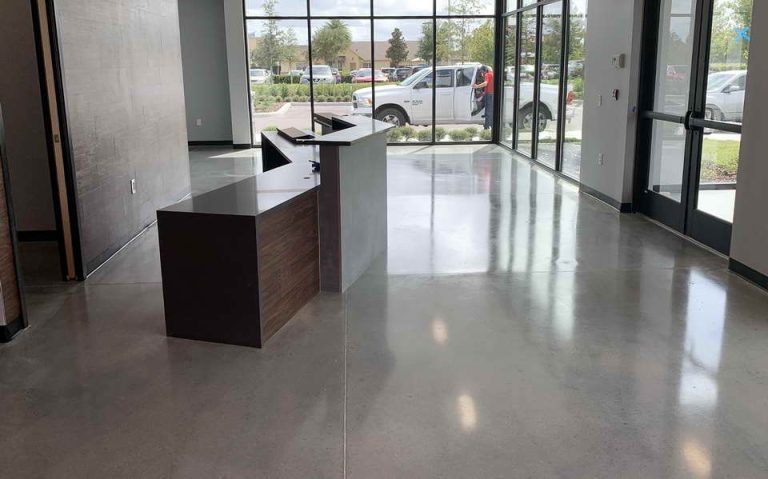
The floor is then polished with progressively finer diamond pads. Each pass makes the surface smoother, until it reaches the level of shine the building owner wants, from a soft satin to a high gloss. The shine comes from the polished stone itself, not from a coating.

6. Grouting, densifying and sealing

Tiny pinholes are filled, and cement terrazzo is treated with a densifier or penetrating sealer to help it resist stains. Unlike wax, these treatments don’t sit on top of the floor, so they don’t need to be stripped and reapplied every few months.

Modern grinding equipment uses dust collection or wet methods with slurry control, which keeps dust to a minimum. Work can be phased so parts of the building stay open.

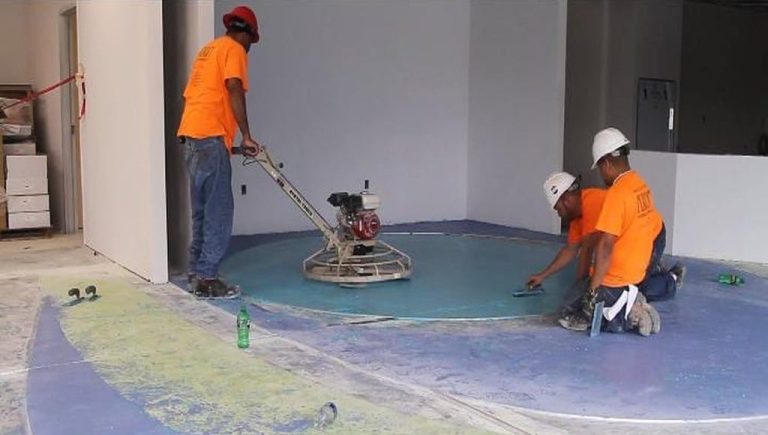
Grinding a terrazzo floor with diamond abrasives

Uncovering Terrazzo Hidden Under Carpet or Tile

Many schools and public buildings covered their terrazzo with carpet or vinyl tile in the 1970s through the 1990s. Uncovering it can be very worthwhile, but it takes planning:

  • Test before removal. Older floor tiles and black adhesives can contain asbestos. They must be tested, and if needed removed by a licensed abatement contractor, before restoration begins.
  • Remove all adhesive. Leftover adhesive is removed by scraping and grinding.
  • Expect some repairs. Tack strip holes, old wall locations, cut-in electrical trenches and earlier patches usually need filling and color matching.

Our demolition and floor preparation team handles flooring removal and surface preparation before the restoration work begins.

Original terrazzo uncovered under old flooring

Restore or Replace?

Restoration is usually the right choice when:

  • The terrazzo is still well bonded to the slab underneath.
  • Cracks are caused by normal movement rather than structural problems.
  • Most of the floor is intact, even if it looks bad today.

New terrazzo, or new sections of terrazzo, may make more sense when:

  • Large areas are loose or delaminated from the slab.
  • The slab underneath has serious structural movement.
  • The layout is changing a lot, for example when walls move or new areas are added. In that case, new epoxy terrazzo infill sections can be designed to match or complement the existing floor.

Caring for Terrazzo After Restoration

  • Dust mop daily to remove grit, which acts like sandpaper underfoot.
  • Use a walk-off entrance system at every main door. Our guide to entrance flooring systems explains how they work.
  • Clean with a neutral pH cleaner. Acidic cleaners, including vinegar, and harsh alkaline cleaners can etch cement terrazzo and break down sealers.
  • Avoid wax. It yellows and builds up. Periodic polishing with diamond pads keeps the shine instead.
  • Reseal cement terrazzo when the sealer manufacturer recommends it.

The National Terrazzo and Mosaic Association also publishes maintenance guidance for building owners.

Where Terrazzo Restoration Makes the Most Sense

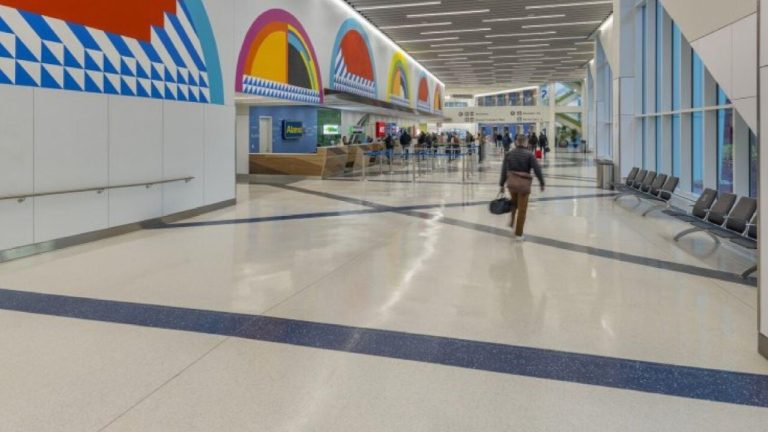
Terrazzo restoration is especially valuable in buildings where the floor is part of the building’s character and sees heavy traffic every day: school hallways, government buildings and courthouses, universities, hospitals, historic office lobbies, and airports and transit hubs.

Terrazzo- CVG Airport

Frequently Asked Questions

It depends on the size of the area, its condition and how many repairs are needed. A lobby or corridor section can often be completed in a few days, while larger buildings are usually phased over several weeks.

Yes. Most cracks can be cleaned out and filled with a color-matched filler that blends into the floor. Cracks caused by structural movement in the slab should be assessed first, because they may return if the cause isn’t addressed.

Usually, yes. After the old flooring and adhesive are removed, and tested for asbestos where needed, the terrazzo can be repaired, ground and polished.

In most cases. The work can be phased by area and scheduled after hours, and modern equipment controls dust.

With daily dust mopping and the right cleaner, a restored terrazzo floor only needs periodic maintenance polishing. How often depends on traffic, so a busy school corridor will need it more often than a quiet office lobby.

A neutral pH cleaner made for stone or terrazzo. Avoid vinegar, acidic or harsh alkaline cleaners, and wax.

Restore Your Terrazzo With an NTMA Member Contractor

Axis Interior Systems is an NTMA member and has installed, repaired and restored terrazzo across Cincinnati, Dayton, Northern Kentucky and the Tri-State region since 1992. We assess your floor honestly, recommend restoration or replacement only where it makes sense, and phase the work around your building.

Have a terrazzo floor that needs attention?

Call (513) 645-1110 or email estimating@axisinteriorsystems.com.

Explore More Flooring Insights

Discover more of our flooring projects and see how we transform commercial spaces with quality materials, expert installation, and lasting results.

Copyright © 2026 IPRS Consultants. - All rights reserved.

Copyright © 2026 IPRS Consultants. - All rights reserved.

Scroll to Top