Hallways and cafeterias are the hardest-working floors in any school. Hundreds of students rush through the corridors at every bell, dragging in grit and rainwater, banging lockers and pulling rolling backpacks. In the cafeteria, the floor takes spilled milk, dropped food and tables and chairs scraping across it several times a day. And all of it has to be cleaned every night by a small custodial team, then installed or replaced in the short window of summer break.
Choosing the right school hallway flooring and cafeteria flooring has a big effect on how a school looks, how safe it is, and how much time custodial staff spend maintaining it. Axis Interior Systems has installed K-12 school flooring across Ohio, Kentucky and Indiana, including projects at Valley View Schools, Lockland Schools and Middletown High School. This guide compares the best options for school hallways and cafeterias, and what to plan for before you choose.
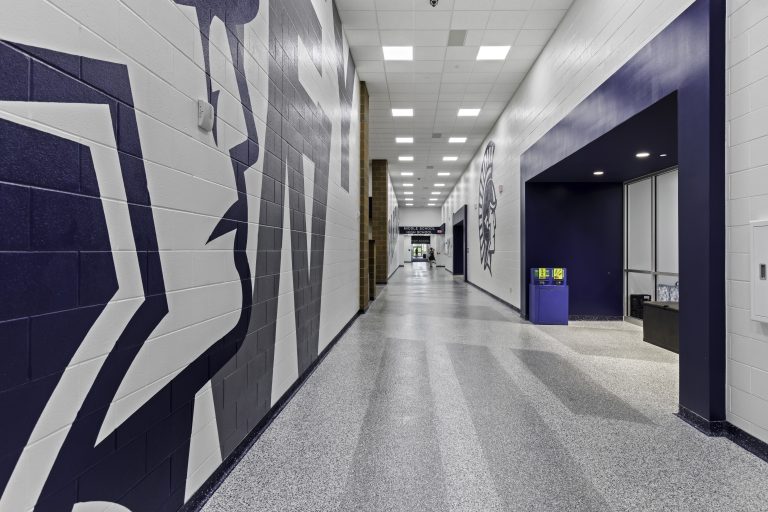
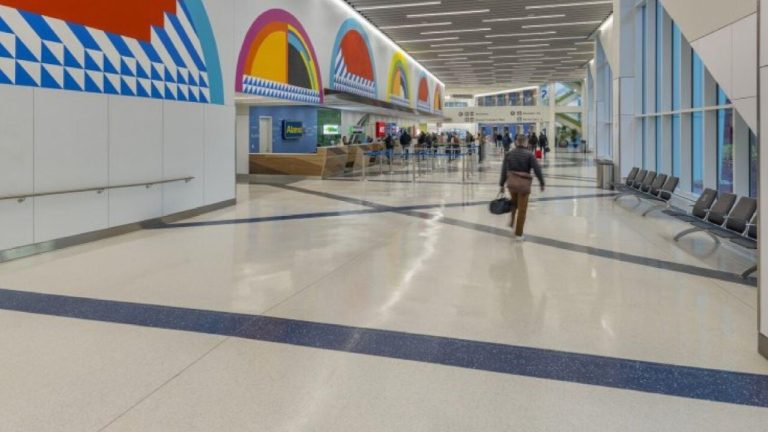
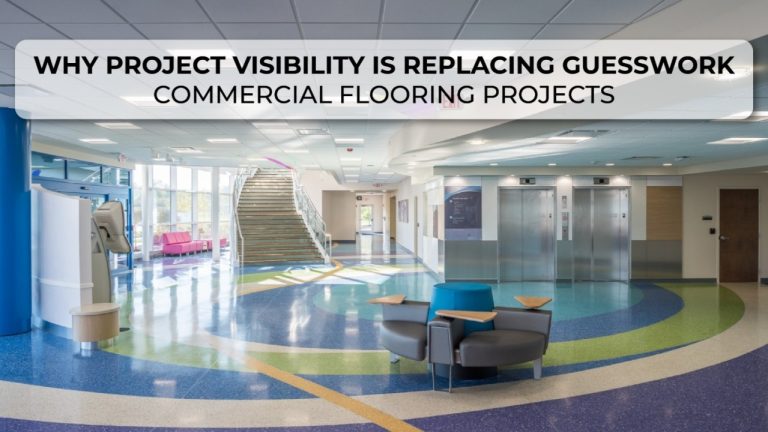
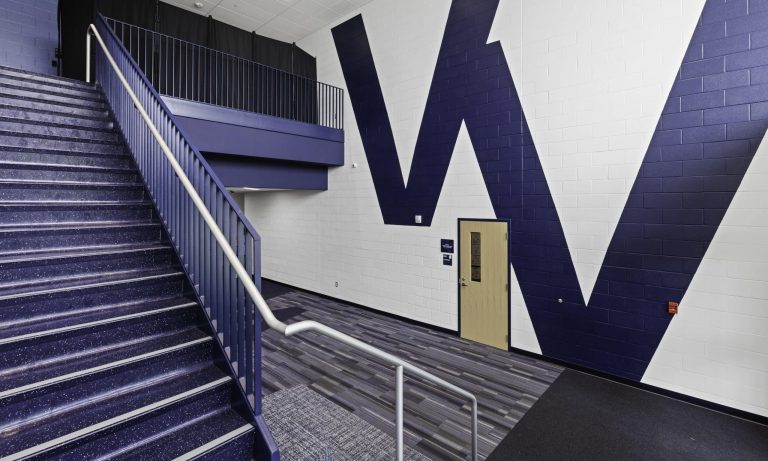
Terrazzo is the longest-lasting choice for school corridors. It is extremely durable, easy to clean, and can include the school’s colors or logo inlaid into the floor. Many terrazzo floors installed decades ago are still in use today. It is usually chosen for main corridors and entrance lobbies in new buildings and major renovations. Learn more about our terrazzo flooring work.
LVT has become one of the most popular choices for school hallways. It has a tough wear layer, comes in a huge range of looks, and many products do not need the regular stripping and waxing that older vinyl floors require. It is also quieter underfoot than traditional vinyl composition tile.
Rubber flooring is very durable, comfortable to walk on and good at reducing noise. It offers good slip resistance and usually needs no wax or floor finish, which saves custodial time. It works well in hallways, stairwells and areas near gyms.
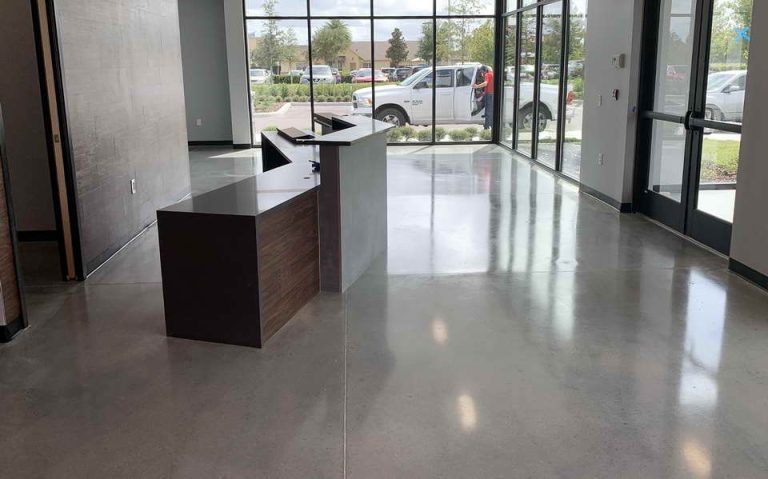
In new schools or buildings with a sound concrete slab, polished concrete can be a durable, low-maintenance hallway floor. It is harder and louder than resilient floors, so it is often paired with acoustic treatments on walls and ceilings.
VCT has been the standard school floor for decades and is still common. It is durable and easy to replace in sections, but it needs regular stripping, waxing and buffing to look its best. That ongoing maintenance is why many schools are now switching their main corridors to LVT, rubber or terrazzo.
For a broader comparison of materials, see our guide to the best flooring for high-traffic areas.
Cafeteria floors face spills, food, heavy tables, constant chair movement and daily wet cleaning. The best choices are:
Behind the serving line, school kitchens need flooring designed for grease, hot water and heavy cleaning. Our guide to commercial kitchen flooring options covers quarry tile and urethane systems, and our guide to non-slip flooring for wet areas explains how slip resistance is measured.
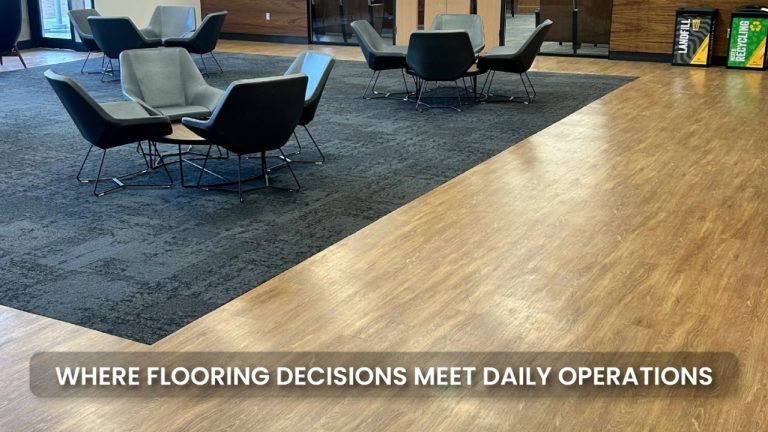
A few cafeteria details are easy to overlook: chair and table glides that won’t scratch the floor, flooring that works with the school’s auto-scrubber, and a slip-resistant zone near the serving line and drinks stations where spills happen most.
The most successful school projects choose flooring by zone, based on how each space is actually used:
Where different floors meet, flush transitions keep carts, wheelchairs and floor machines moving smoothly.
Most school flooring work happens during summer break, and that window fills up fast:
Read more in our guide to installing flooring in occupied buildings.
Before choosing a floor, ask what it will take to maintain it: daily cleaning, periodic deep cleaning, and any restoration work over its life. Make sure the cleaning method fits your custodial team’s equipment and schedule. For example, many LVT products should not be stripped and waxed like VCT, and doing so can shorten their life and affect the warranty.
Terrazzo is the most durable option and can last for the life of the building. LVT and rubber are also very durable and are popular for corridor renovations.
Sheet vinyl with heat-welded seams, slip-resistant LVT and rubber are all strong choices. Sheet vinyl is the easiest to keep clean, and rubber is the quietest.
Yes, VCT is still common in schools. However, it needs regular stripping and waxing, so many schools are replacing it with LVT, rubber or terrazzo in their busiest areas.
Rubber flooring and LVT with an acoustic backing reduce footfall noise compared with harder surfaces. Acoustic ceiling and wall treatments also help.
Not when the right product is used. Choose LVT that is rated for slip resistance in wet conditions and keep a regular cleaning schedule.
Axis Interior Systems has helped schools across Cincinnati, Dayton, Northern Kentucky and the Tri-State region choose and install durable hallway, cafeteria and classroom flooring since 1992. We work around the school calendar and help you choose the right floor for each zone.
Call (513) 645-1110 or email estimating@axisinteriorsystems.com.
Discover more of our flooring projects and see how we transform commercial spaces with quality materials, expert installation, and lasting results.
Copyright © 2026 IPRS Consultants. - All rights reserved.