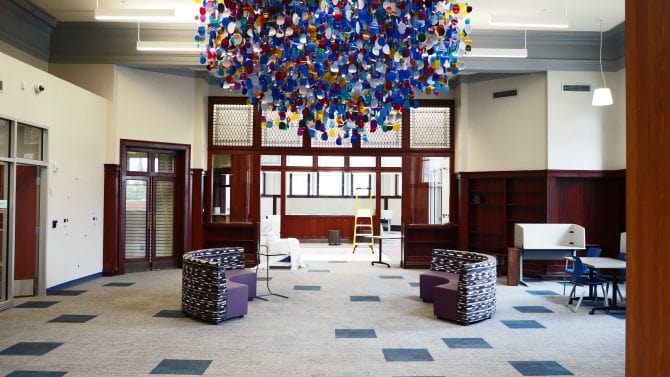
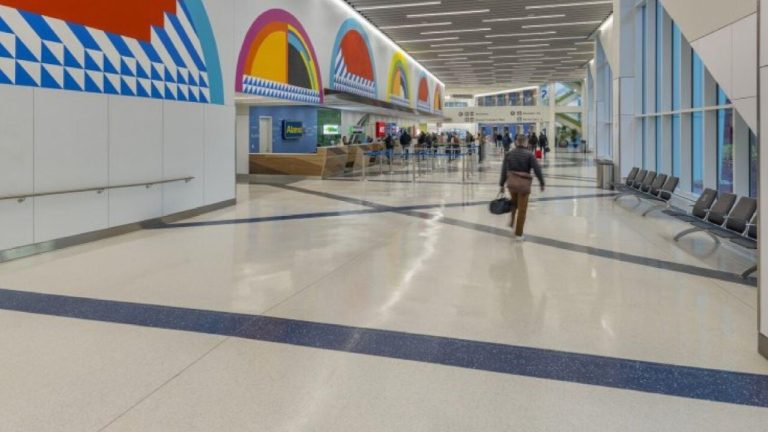
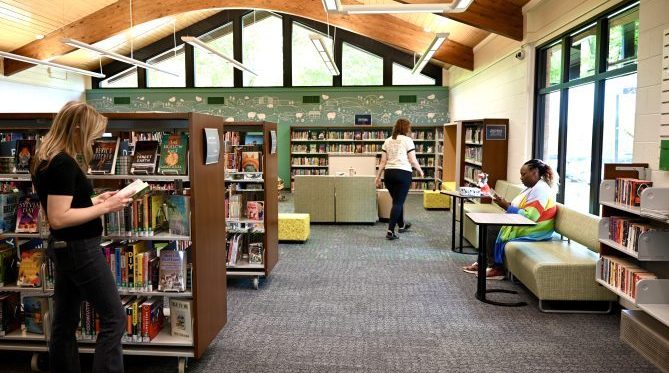
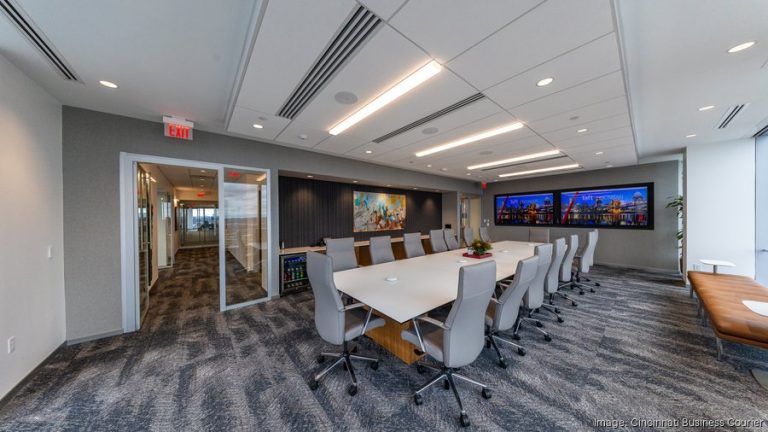
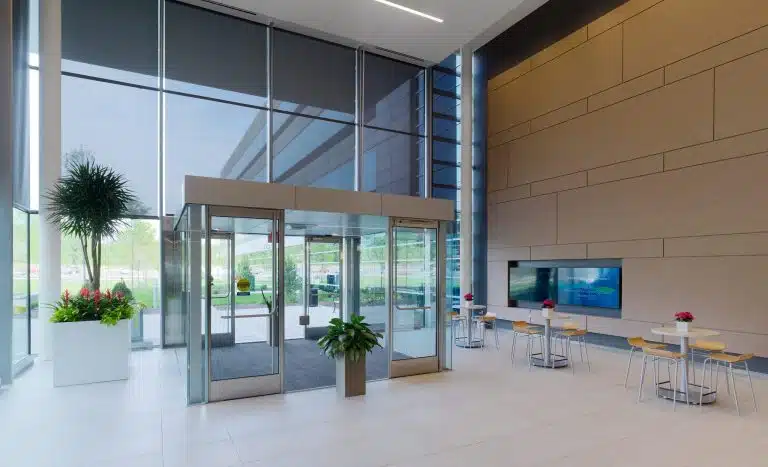
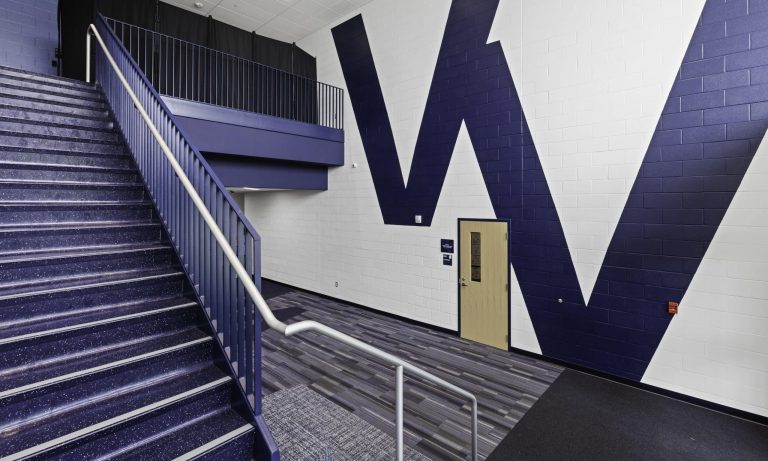
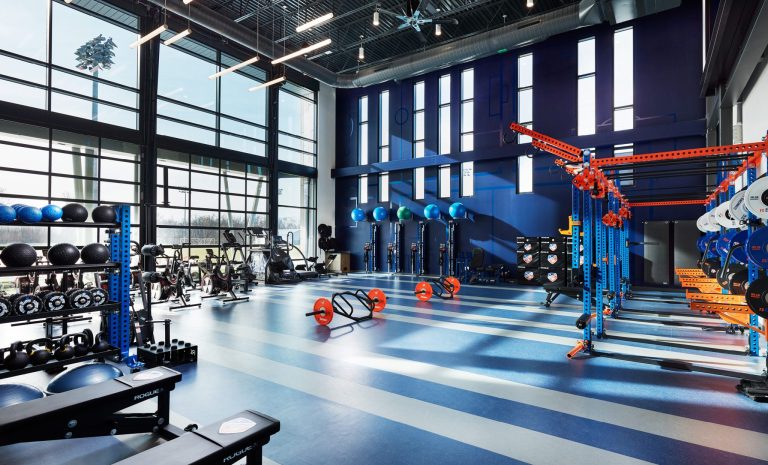
Commercial rubber flooring at the FC Cincinnati Mercy Health Training Center

Commercial Rubber Flooring: Where It Works Best and Why

Introduction

Commercial rubber flooring is one of the hardest-working floors in commercial buildings. It stands up to heavy equipment, dropped weights and constant foot traffic, stays slip-resistant in wet areas, absorbs noise, and is comfortable for people who stand on it all day. It is also one of the easiest floors to maintain, because most rubber floors never need wax or floor finish.

But not every rubber floor suits every space. A weight room, a hospital corridor and a commercial kitchen each need a different type and thickness of rubber. Axis Interior Systems has installed commercial rubber flooring in fitness centers, schools, healthcare facilities and offices across Ohio, Kentucky and Indiana for more than 30 years, including the FC Cincinnati Mercy Health Training Center. This guide explains the main types of rubber flooring, where each works best, and how to keep it looking good.

Why Choose Rubber Flooring for Commercial Spaces?

Durability

Rubber resists dents, gouges and wear from heavy traffic and rolling loads.

Slip resistance

Provides good grip when wet, ideal for entrances, stairs, and wet areas.

Sound control

Rubber absorbs impact noise, which helps in busy corridors, classrooms and gyms.

Comfort

Rubber has a little give underfoot, which reduces fatigue for staff who stand or walk for long shifts.

Low maintenance

Most commercial rubber flooring needs no wax or floor finish, just regular cleaning.

Impact protection

Thicker rubber protects both the slab and dropped equipment in fitness areas.

Types of Commercial Rubber Flooring

Vulcanized (homogeneous) rubber

Made from natural and/or synthetic rubber that is cured under heat and pressure, so the color and material run all the way through. It has a smooth, dense surface, comes in a wide range of colors and textures, and is common in healthcare, education and offices.

Recycled rubber

Made largely from recycled rubber, often with colored flecks mixed in. It is thicker and more shock-absorbing, which makes it the standard choice for gyms and weight rooms. Some recycled products have a rubber smell when new, which fades with time and good ventilation.

Oil- and grease-resistant rubber

Standard rubber can be damaged or stained by oils and fats. Kitchens, workshops and some industrial areas need a rubber compound specifically made to resist oil and grease. Always check the product’s chemical resistance before choosing rubber for these spaces.

Rubber Tiles vs. Rubber Rolls

Rubber flooring tiles come in squares, either glued down or with interlocking edges. They are easy to handle, easy to replace one at a time, and good for smaller rooms, fitness areas and spaces with lots of corners.

Rubber flooring rolls cover large areas with fewer seams. They are faster to install in big open spaces such as gyms and long corridors, and give a cleaner look. In healthcare and other hygiene-sensitive areas, seams can be welded or sealed for a continuous surface.

Stair treads and risers are made specifically for stairs, often with a built-in nosing in a contrasting color.

Commercial rubber flooring tiles and rolls

Where Commercial Rubber Flooring Works Best

Gyms and fitness centers

Commercial gym rubber flooring is the go-to choice for weight rooms, cardio areas and functional training spaces. Thickness is chosen by how the space is used: thinner rubber works under cardio machines, while free-weight and drop zones need much thicker rubber to absorb impact and protect the slab. Our athletic flooring page covers gym, court and weight room floors in more detail.

Commercial kitchens and wet areas

Commercial kitchen rubber flooring is a popular choice in prep areas, dish rooms and behind bars, where staff stand for long shifts and floors are often wet. The key is to choose an oil- and grease-resistant rubber with a slip-resistant surface. On the hot cook line itself, quarry tile or urethane resinous systems are often a better fit. Our guide to commercial kitchen flooring options compares them, and our guide to non-slip flooring for wet areas explains how slip resistance is measured.

Healthcare and senior living

Rubber is widely used in hospital corridors, patient rooms, clinics and senior living communities. It is quiet, comfortable for staff on long shifts, slip-resistant, and needs no wax, so there is no stripping that disrupts patients. Learn more about our healthcare flooring.

Schools and universities

In K-12 schools, rubber is a durable, quiet option for hallways, stairwells, locker rooms, science labs and areas near gyms. It handles heavy traffic and reduces noise between classes.

Stairs

Rubber stair treads with contrasting nosings help people see the edge of each step and provide good grip. They are one of the most common choices for commercial stairwells. Read our guide to the best commercial flooring for stairs.

Offices and high-traffic corridors

Rubber is less common in offices than carpet tile or LVT, but it works well in busy corridors, entrances and break rooms. See how it compares with other materials in our guide to the best flooring for high-traffic areas.
Things to Check Before You Choose Rubber

  • The right compound for the space. Standard, recycled and oil-resistant rubber perform very differently.
  • Match the thickness to the use: thinner for corridors and offices, thicker for fitness areas.
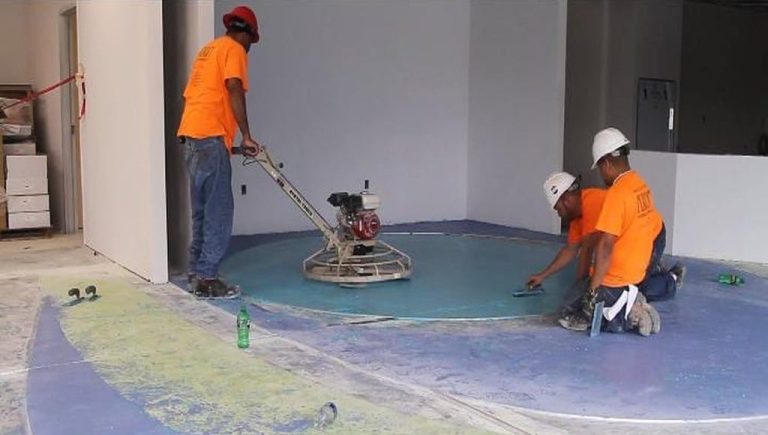
  • Subfloor moisture. Like all glued-down floors, rubber needs the concrete slab tested for moisture before installation.
  • Indoor air quality. For occupied spaces, choose low-VOC adhesives and products with indoor air quality certifications such as FloorScore.
  • Thicker gym rubber needs ramped or recessed transitions so people don’t trip at the edge.
  • Color and light. Some colors can fade in strong, direct sunlight, so check the manufacturer’s guidance for sunny spaces.

How to Maintain Commercial Rubber Flooring

  • Clean before first use. New rubber often has a factory coating that should be removed with an initial cleaning, as the manufacturer directs.
  • Dust mop or vacuum daily to remove grit.
  • Use a neutral pH cleaner made for rubber. Avoid solvents and harsh chemicals that can damage the surface.
  • Use the right scrubber pads. Automatic scrubbers work well with the pads the manufacturer recommends.
  • Skip the wax. Most commercial rubber flooring is designed to be used without floor finish, which saves time and keeps it slip-resistant.
  • Use walk-off mats at entrances to stop grit and water before they reach the floor. See our guide to entrance flooring systems.

Frequently Asked Questions

Yes. Commercial rubber flooring is durable, slip-resistant, quiet and easy to maintain, which makes it a strong choice for gyms, healthcare facilities, schools, stairs and busy corridors.

Thick recycled rubber flooring is the most common choice for weight rooms and free-weight areas, because it absorbs impact and protects the slab. Thinner rubber works under cardio equipment.

Yes, as long as it is an oil- and grease-resistant rubber with a slip-resistant surface. It works well in prep areas, dish rooms and bars. Quarry tile or urethane systems are often preferred on the hot cook line.

Rolls are faster to install in large open areas and have fewer seams. Tiles are easier to handle and replace, and suit smaller rooms and spaces with lots of corners.

Most commercial rubber floors do not need wax or floor finish. Regular cleaning with a neutral cleaner is usually enough. Always follow the manufacturer’s maintenance guide.

Some recycled rubber products have a rubber smell when first installed, which fades over time with ventilation. Vulcanized rubber flooring for interiors usually has little or no smell.

Find the Right Rubber Flooring With Axis

Axis Interior Systems has installed commercial rubber flooring in gyms, healthcare facilities, schools and offices across Cincinnati, Dayton, Northern Kentucky and the Tri-State region since 1992. We help you choose the right type and thickness for each space and install it to the manufacturer’s specifications.

Planning a rubber flooring project?

Call (513) 645-1110 or email estimating@axisinteriorsystems.com.

Explore More Flooring Insights

Discover more of our flooring projects and see how we transform commercial spaces with quality materials, expert installation, and lasting results.

Copyright © 2026 IPRS Consultants. - All rights reserved.

Copyright © 2026 IPRS Consultants. - All rights reserved.

Scroll to Top