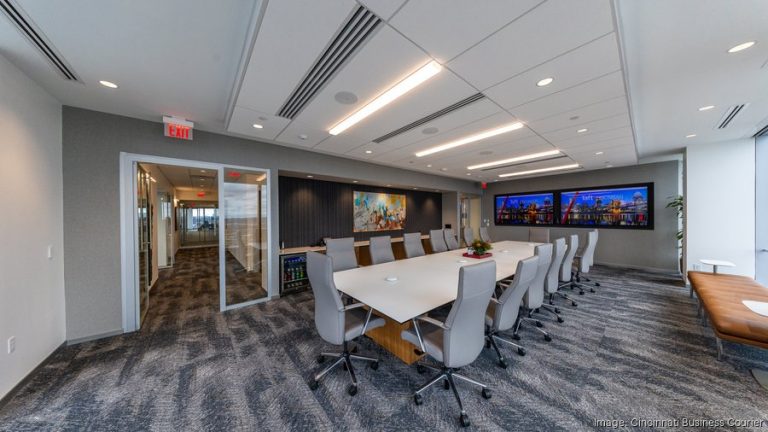
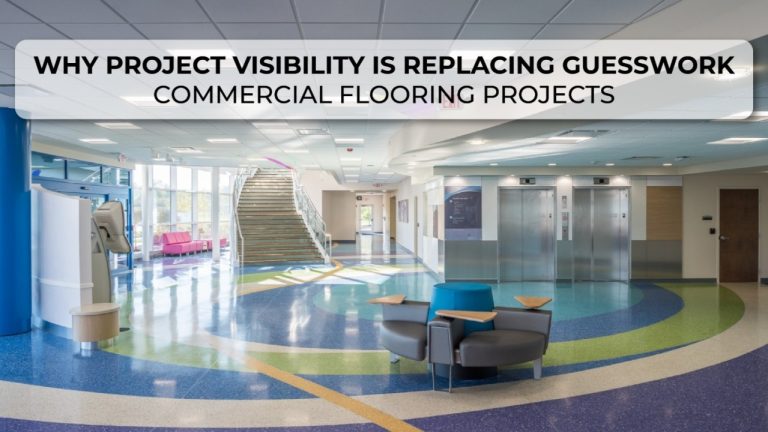
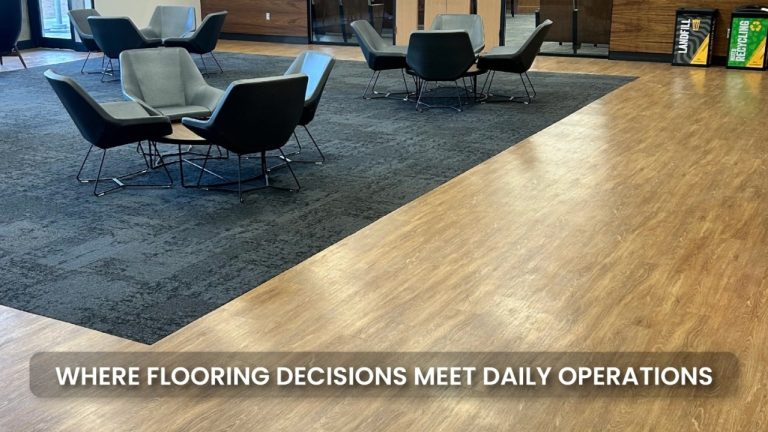
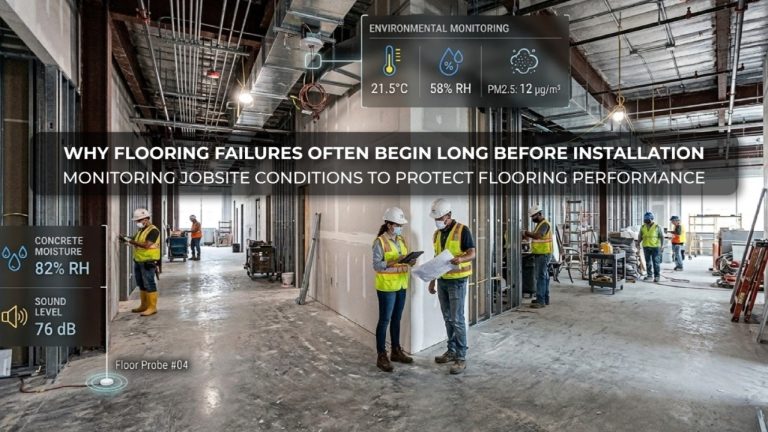
“Flooring professionals reviewing material samples and project plans.”

What's the Difference Between Commercial and Residential Flooring?

Introduction

If you’ve ever compared prices on what looks like the same vinyl plank or carpet tile and wondered why one option costs noticeably more, the answer usually comes down to one label: commercial grade flooring. It’s not a marketing term — it reflects real differences in construction, testing, and expected performance that matter a great deal once a floor is handling hundreds of people a day instead of a handful.

At Axis Interior Systems, we’ve specified and installed commercial grade flooring across offices, retail spaces, schools, and healthcare facilities throughout Ohio, Kentucky, and Indiana for more than 30+ years in commercial flooring — see our full range of commercial flooring services for the materials we work with. This guide breaks down what actually separates commercial flooring from residential flooring, and why getting that distinction right matters for your project.

What Does Commercial Grade Mean, Exactly?

Commercial grade flooring is built and rated to handle conditions residential flooring was never designed for: continuous foot traffic, rolling loads from carts and equipment, harsher cleaning chemicals, and years of use without a break. Where a residential floor might see a family of four walking across it a few dozen times a day, a commercial floor in an office lobby or retail store can see that same traffic volume in a single hour.

That difference shows up in how the product is engineered from the start, not just in how thick the box says it is.

The Real Differences Between Commercial and Residential Flooring

Wear layer thickness. On resilient flooring like LVT and LVP, the wear layer is the clear protective coating on top that resists scratches and stains. Residential products typically carry a wear layer between 6 and 12 mils. Commercial grade products commonly start at 20 mils and can run higher for the heaviest-traffic applications. That thicker layer is the single biggest reason a commercial floor holds its finish for years longer under equivalent use.

Overall material density and thickness. Commercial flooring is generally denser and often thicker overall, which improves impact resistance and helps the floor resist indentation from furniture legs, equipment casters, and foot traffic concentrated in the same paths day after day.

Fiber and backing construction (carpet). Commercial carpet typically uses solution-dyed nylon or similar fibers that resist fading, staining, and aggressive cleaning far better than residential-grade fibers. Backings are also built differently — commercial carpet tile backings are engineered for dimensional stability under rolling loads, which matters in office and retail environments where furniture gets rearranged regularly.

Testing and performance ratings. Commercial products are tested against standards residential flooring simply isn’t held to — ASTM standards for resilient flooring covering abrasion resistance, indentation, and thickness, along with fire ratings appropriate for commercial building codes. A residential product hasn’t been engineered or tested against those benchmarks, which is part of why it’s not code-compliant for most commercial applications regardless of how it performs in a home.

Warranty terms. Commercial warranties are typically structured around traffic level and years of service under commercial use conditions, while residential warranties assume much lighter use. A 15-year residential warranty and a 15-year commercial warranty are not protecting against the same amount of wear.


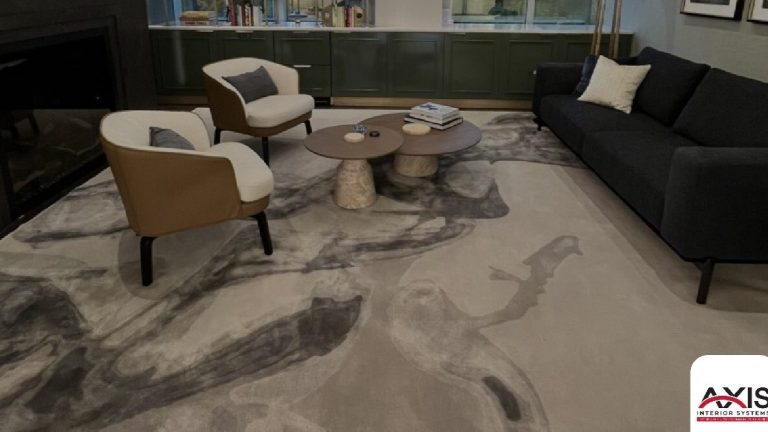
Commercial-grade carpet tile texture and backing.

Why Durable Commercial Flooring Costs More Up Front — And Saves Money Over Time

The price gap between commercial and residential-grade materials is real, and it’s tempting for a budget-conscious project to look at cheaper residential product and wonder if it would hold up fine in a lower-traffic commercial space. Occasionally it can, in genuinely light-use areas. But the math generally doesn’t favor that shortcut.

A durable commercial flooring product built for the traffic it will actually see typically outlasts a residential substitute by several years, which means fewer replacement cycles, less disruption to the business, and lower total cost over the life of the space — even though the sticker price is higher at installation. Running the comparison over 10 to 15 years rather than just the first purchase is usually where the case for commercial grade becomes clear.

Where the Line Gets Blurry

Not every commercial space needs the heaviest-duty commercial grade product available, and not every “commercial” label means the same thing across manufacturers. A few things worth knowing:

Commercial grade isn’t one tier. Manufacturers typically offer light commercial, moderate commercial, and heavy commercial ratings within their commercial lines. A low-traffic back office doesn’t need the same spec as a hospital corridor or a retail entryway, even though both fall under “commercial.”

Residential-look products marketed for commercial use exist. Some manufacturers produce residential-style designs with commercial-grade construction underneath, aimed at spaces like corporate lounges or multifamily common areas that want a softer aesthetic without sacrificing durability. Read the spec sheet rather than assuming from appearance alone.

Building codes often decide the question for you. Fire rating requirements, ADA slip-resistance standards, and local commercial building codes frequently rule out residential-grade materials outright, regardless of budget preferences. It’s worth checking this early rather than after a product has already been selected.

How to Confirm What You're Actually Buying

A few practical steps before finalizing a flooring decision for a commercial space:

  • Ask for the manufacturer’s wear layer thickness and traffic rating in writing, not just a verbal assurance that a product is “commercial grade”
  • Request the ASTM test data behind indentation resistance and static load ratings if the space will see heavy furniture or equipment
  • Confirm the fire rating matches your building’s commercial code requirements before ordering
  • Match the warranty terms against your expected traffic level — a warranty rated for light commercial use won’t protect a high-traffic retail floor
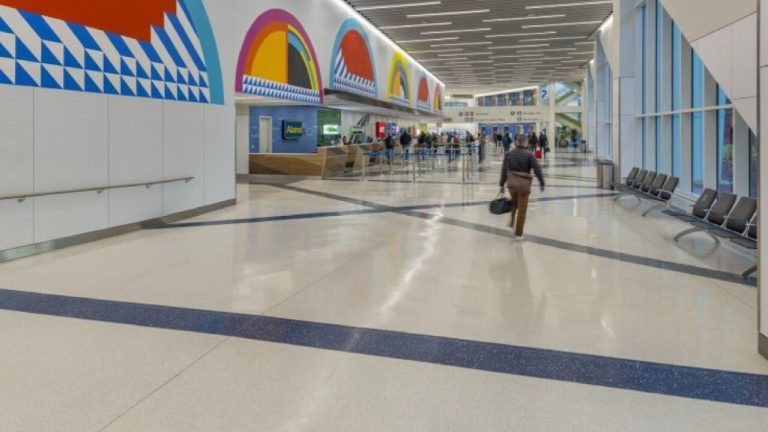
Busy commercial lobby with heavy foot traffic.

Common Spaces Where the Commercial/Residential Line Matters Most

A few space types where this distinction tends to catch people off guard:

Multifamily common areas. Lobbies, hallways, and fitness rooms in apartment buildings see far more foot traffic than any single unit’s residential flooring, even though the aesthetic goal is often closer to a residential look. This is a common spot where light commercial or moderate commercial grade product is the right call, even when the design brief reads “residential feel.”

Home-based businesses and live/work spaces. A ground-floor retail unit or client-facing home office technically falls under commercial code in most jurisdictions, which can surprise owners who assumed residential-grade materials would be fine because the space still functions partly as a home.

Renovated older buildings. Adaptive reuse projects — converting a former residence or light industrial building into commercial space — sometimes inherit residential-grade flooring from a previous use. It’s worth confirming what’s actually installed rather than assuming it meets current commercial code, especially before any new tenant buildout.

Short-term and vacation rentals operating at commercial-like volume. High-turnover rental properties can see traffic levels closer to hospitality than to a typical

Short-term and vacation rentals operating at commercial-like volume. High-turnover rental properties can see traffic levels closer to hospitality than to a typical residence, which is part of why some owners choose to upgrade to commercial-grade materials even though the space is technically residential.

Frequently Asked Questions

Find answers to common questions about commercial flooring, grades, and specifications.

Commercial flooring is built with a thicker wear layer, denser construction, and more durable fiber and backing materials than residential flooring, and it’s tested against commercial-specific standards for abrasion, indentation, and fire rating that residential products aren’t held to.

It means the product is engineered and tested to handle continuous, heavy foot traffic, rolling loads, and commercial cleaning protocols — well beyond what a typical residential floor is built to withstand.

Generally, no — building codes for fire rating and slip resistance often rule it out, and even where it’s technically allowed, residential flooring will wear out far faster under commercial traffic levels than a comparably priced commercial-grade product.

Usually at the point of purchase, yes, but the gap narrows or reverses over the life of the floor once you account for how much longer commercial grade materials last under heavy use.

Among resilient flooring, heavy commercial-rated LVT with a 28-mil or higher wear layer is among the most durable. For extreme-traffic environments, polished concrete, terrazzo, and resinous systems offer even longer service life.

Check the manufacturer’s published wear layer thickness, traffic rating, and ASTM test data rather than relying on marketing language alone — a genuinely commercial-grade product will have this documentation available.

Work With a Contractor Who Specifies the Right Grade for Your Space

Axis Interior Systems helps you choose the right commercial flooring grade for your space, traffic, and budget.
With 30+ years of experience, we specify flooring built for your project’s needs.

Explore More Flooring Insights

See how we deliver quality commercial flooring solutions across a range of projects and industries.

Copyright © 2026 IPRS Consultants. - All rights reserved.

Scroll to Top