Choosing the right flooring for a commercial space is not a small decision. It affects everything from maintenance costs and durability to how people experience the space every day. Across Cincinnati and the broader Tri-State region, commercial vinyl flooring has become one of the most trusted solutions for businesses that need both performance and flexibility.
From healthcare facilities and corporate offices to hospitality and retail environments, vinyl flooring continues to stand out as a practical and reliable choice. In this guide, we break down the types, costs, and best use cases so you can make an informed decision based on real-world performance.
Commercial spaces require flooring that can handle constant use without compromising appearance. Vinyl flooring meets this need by offering a balance of durability, design versatility, and cost efficiency.
Industry organizations like the Carpet and Rug Institute highlight how modern flooring systems are evolving to meet performance and sustainability standards across commercial environments.
For businesses in Ohio, Kentucky, and Indiana, this matters even more. Seasonal changes, varying foot traffic levels, and long operating hours demand flooring that performs consistently throughout the year.
Not all vinyl flooring is the same. Each type is designed for specific environments and performance needs.
LVT is one of the most popular choices in commercial flooring today due to its combination of style and durability. It stands out for its highly realistic wood and stone visuals, strong resistance to scratches and wear, and the convenience of easy plank or tile replacement. This makes it especially well-suited for environments such as corporate offices, hotels and hospitality spaces, and retail settings. Overall, LVT allows businesses to achieve a high-end, sophisticated look without the maintenance challenges associated with natural materials.
VCT has been a long-standing option in commercial spaces due to its cost-effective upfront cost, durability under heavy traffic, and requirement for regular maintenance and polishing. It is best suited for schools, government buildings, and large institutional spaces, and while it requires more upkeep than newer systems, it remains a practical choice for budget-conscious projects.
Sheet vinyl is widely used in environments where hygiene is critical due to its advantages, including minimal seams for easier cleaning, strong moisture resistance, and a smooth, continuous surface. It is best suited for healthcare facilities, laboratories, and clean environments, and its ability to create a near-seamless finish makes it one of the most hygienic flooring options available.
Cost is often one of the first considerations when selecting flooring. Commercial vinyl offers flexibility depending on the type and installation complexity.
LVT tends to fall in the mid to high price range due to its design and durability, while VCT is typically the most affordable option upfront. Sheet vinyl pricing varies depending on thickness and performance requirements.

Installation depends on several factors, including subfloor preparation, space size and layout, and the adhesive and installation method used. In older buildings across Cincinnati and the surrounding areas, subfloor preparation can significantly influence the total cost.

Vinyl flooring offers a strong return on investment thanks to its cost-effective benefits. It has low maintenance costs, easy repairs, and a longer lifespan than many commercial materials, making it a durable and practical choice for businesses.

The versatility of vinyl flooring makes it suitable for a wide range of industries.
Sheet vinyl and LVT are commonly used for their hygienic properties and durability. They support infection control and withstand frequent cleaning.

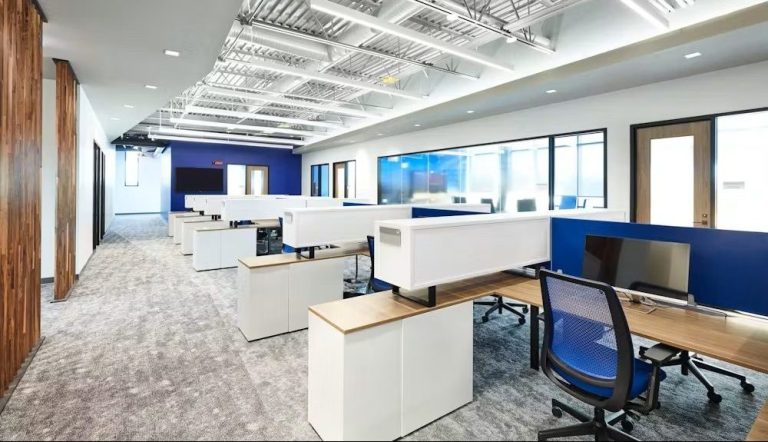
LVT is a preferred choice for offices due to its balance of aesthetics and performance. It creates a professional environment while remaining easy to maintain.

Retail environments benefit from vinyl’s durability and design flexibility. It can handle high foot traffic while maintaining visual appeal.

Hotels and restaurants use vinyl flooring to achieve a premium look with practical maintenance requirements.

Understanding how flooring performs in actual projects provides valuable insight.
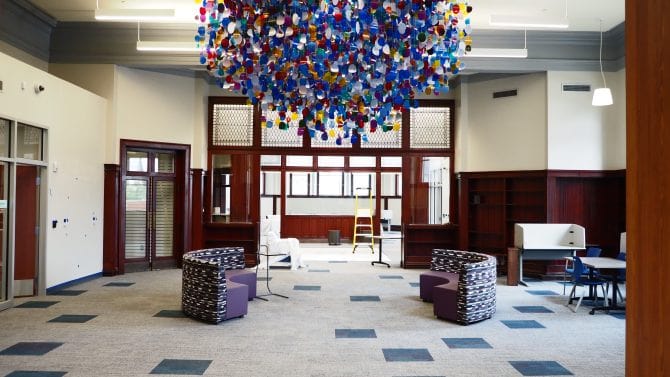
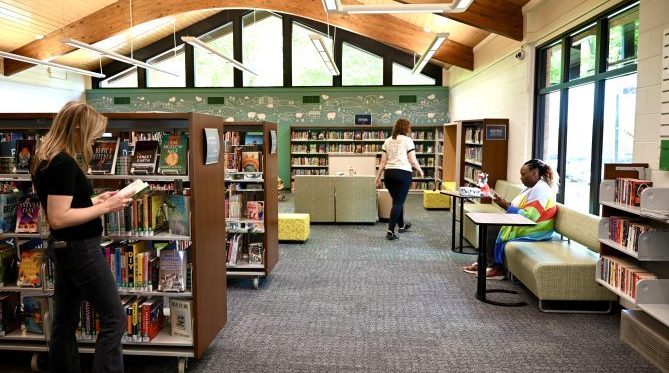
At the Dayton Metro Library Huber Heights, flooring needed to handle consistent public use while maintaining a clean and modern appearance. Vinyl flooring provided the durability required for daily traffic while supporting a welcoming environment.
Similarly, at The Summit Hotel, design and performance had to work together. Vinyl flooring helped achieve a refined look across guest and public areas while ensuring long-term durability.
These examples show how commercial vinyl flooring adapts to different environments without compromising performance.
One of the key reasons businesses choose vinyl flooring is its manageable maintenance.
Regular sweeping and dust control, along with damp mopping using appropriate cleaning solutions.

Occasional deep cleaning along with protective coatings, if required.

Compared to other flooring types, vinyl does not demand intensive upkeep, which helps reduce operational costs over time.
When evaluating flooring options, vinyl often stands out for its balance.
If you are comparing materials, this detailed guide on https://axisinteriorsystems.com/commercial-flooring-carpet/
provides additional perspective on how carpet performs in commercial environments.
For a broader understanding of performance standards and material comparisons, industry resources such as the Carpet and Rug Institute offer valuable guidance.
Even the best flooring material depends on proper installation.
Key factors include:
Poor installation can lead to issues such as lifting, uneven surfaces, or reduced lifespan. This is why working with experienced commercial flooring professionals is essential.
Commercial flooring decisions should always consider long-term performance.
Vinyl flooring continues to evolve with:
As businesses in the Tri-State region continue to invest in modern spaces, vinyl remains a forward-looking solution that balances cost, durability, and design.
For businesses exploring broader options, commercial resilient flooring systems offer additional solutions that build on the strengths of vinyl and other durable materials.
Commercial vinyl flooring has become one of the most reliable flooring solutions for businesses across Cincinnati and the Tri-State region. It offers strong durability under daily use, flexible design options, and cost-effective performance over time, making it suitable for both functional and aesthetic requirements. Whether upgrading an existing space or planning a new project, vinyl flooring provides the versatility and reliability needed to support long-term success.
Discover additional insights on commercial flooring systems, installation methods, and performance considerations across various industries.
Copyright © 2026 IPRS Consultants. - All rights reserved.